Saturday, May 27, 2006

Weekend in Barcelona, 1 of 2

Arrival

So we planned to make a family trip to Barcelona last weekend… Except that everything went wrong: I couldn’t buy train tickets, and by the time I figured that, plane tickets were crazy expensive… As I didn’t have any choice and everything else was already booked, I bought them anyway. And on the day when my dad was supposed to fly to Barcelona, Riga airport had big logistic problems. Apparently they took too many flights and couldn’t manage all the planes. My dad waited for his flight for the whole afternoon, just to find out by the end of the day that his flight was cancelled and will be cancelled the following day too… So he didn’t manage to go to Barcelona! Well, considering the price I paid for the tickets to get there, my sister and I went there just the two of us.
We took the night flight on Friday and landed in Barcelona at midnight. None of us speak Spanish. And Spanish obviously don’t speak English. That’s impressive. They’re even worse at learning foreign languages than French ;-). We managed to find our tiny hotel, woke up the owner to let us in and went to bed immediately.

Day 1 Gotic District and the Cathedral

We started our journey in Barcelona on Saturday morning.
Our hotel was conveniently located near the Arc de Triomf.
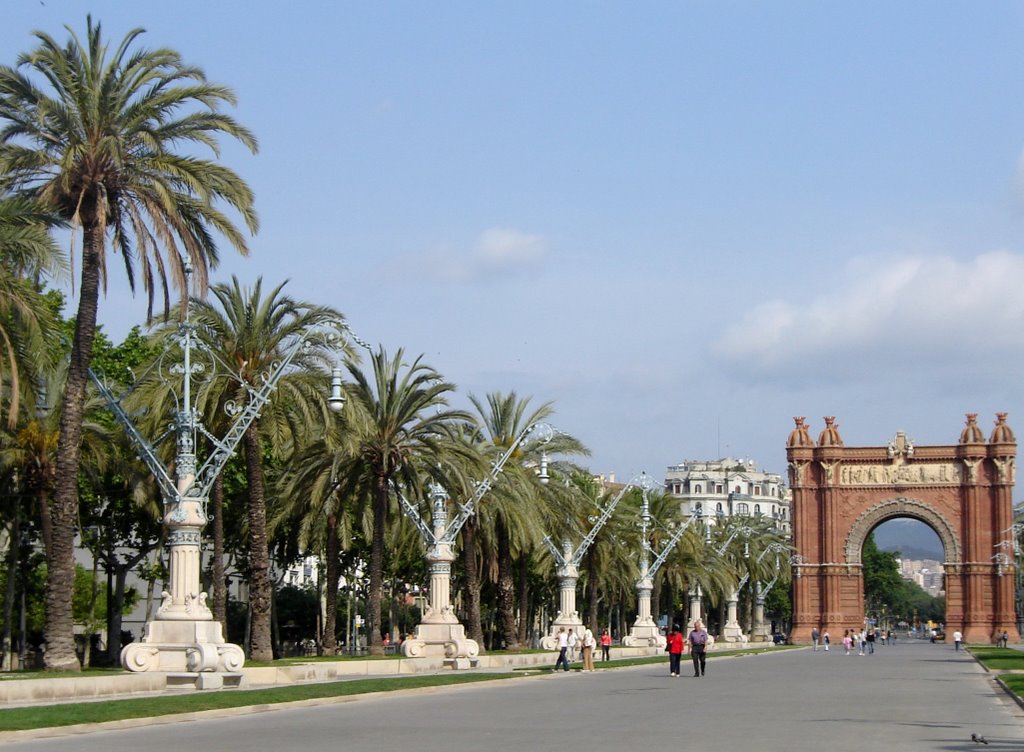
We walked past it and headed to Plaça de Catalunya. There was a HUGE queue of tourists to go on one of those tourist buses that go around the city and stop at major sight-seeing places. Another interesting thing was that shops were mostly closed in the morning and only started to open around 11am. I guess Spanish sleep late.
We began with visiting the La Seu Cathedral in the gothic district. The Cathedral has nothing to do with cathedrals that I’ve seen before. It has a nice cloister with palm trees and a little water basin in the middle of it. It also has white geese. Exactly 13 of them, each symbolising one year in the life of the martyr Santa Eulalia, a young girl tortured to death in the 4th century by the Romans for her religion. It also had fish and turtles. I liked the cloister. But by the time we finished taking pictures of the geese, the cathedral itself was closing! Apparently they close it for lunch… so we had to go out and come back later in the afternoon to visit it. I didn’t know God was taking his time to have lunch, or maybe siesta, too…
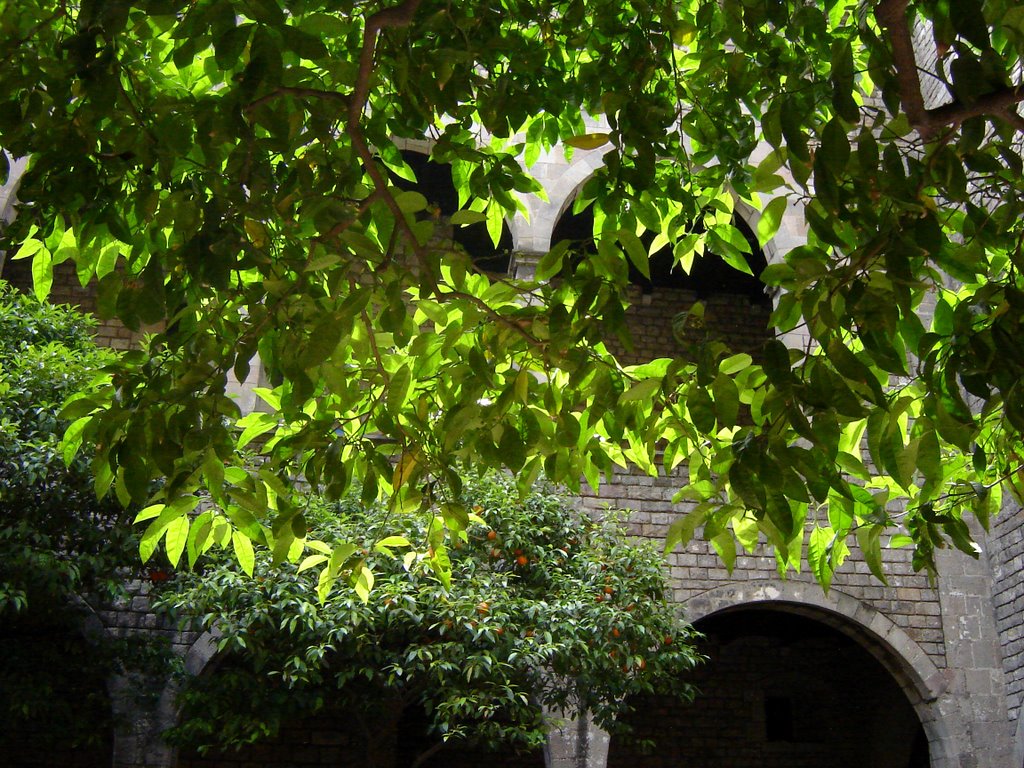
Anyway. We wandered in the heart of the city, the historical district called Gotic District. It is a lot different from all I saw before. The coolest things ever in Barcelona turned out to be those little yards with ORANGE TREES! Oranges actually grow on the trees in the middle of the city! Excellent. They also have palm trees.
Another stereotype confirmed is that Spanish like music. They play it everywhere, in the streets, in the subway, in restaurants. And they’re good.
So after lunch we managed to visit the Cathedral, which we had to pay for. None of the cathedrals is free in Barcelona! I wonder how often they pray there if they have to pay every time just to walk in. Or they just charge tourists.
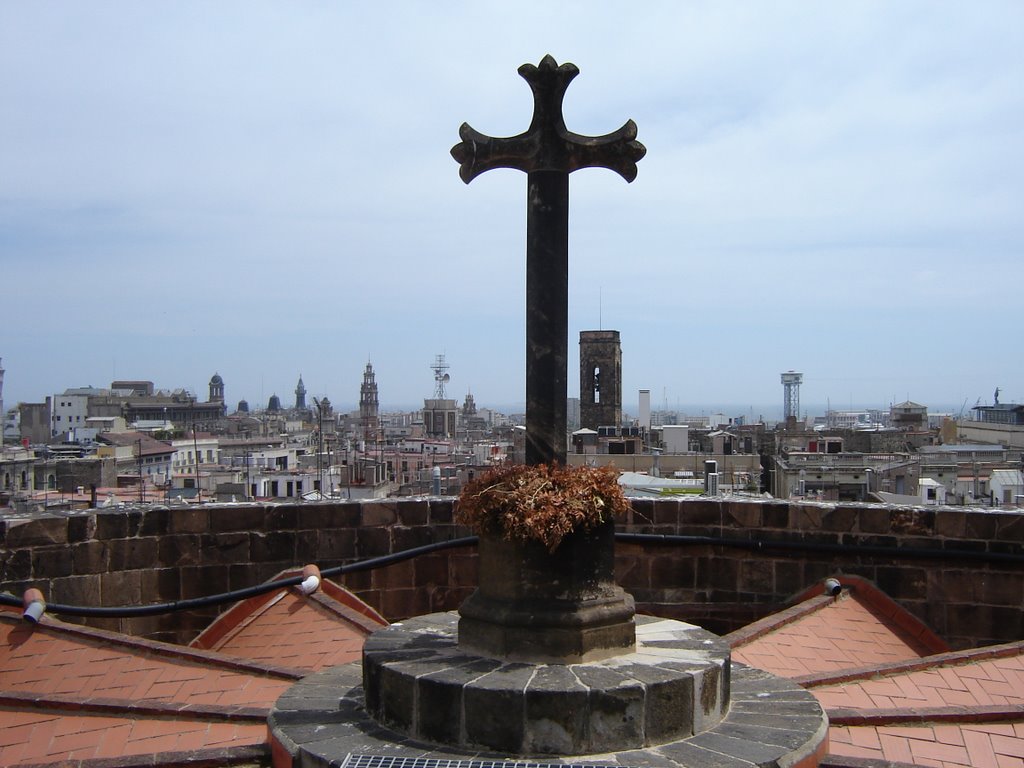
Spanish cathedrals are a lot more decorated inside than those in France. And their Maria is a lot more beautiful. However we didn’t manage to see the outside of the Cathedral, cause it was all in construction. I was so disappointed. But we did go on the roof. You have to pay to get into a cathedral in Barcelona, but the ticket includes the tour to the roofs which is pretty cool. We got a nice view of the city from up there.

Мы прибыли в Барселону поздно вечером в пятницу, а на следущее утро отправились исследовать город.
Наша гостиница находилась недалеко от Триумфальной Арки. Пройдя мимо неё, мы направились к площади Каталонии, где меня поразила огромная очередь перед туристическим автобусом. Даже в Париже нет таких очередей! Затем мы пришли в Готический квартал, исторический центр города, где находится старинный собор La Seu. Он совершенно непохож на соборы Франции. Он разделяется на сам собор и прилегающий к нему внутренний двор. Во дворе растут пальмы, за оградой гуляют белые гусыни, 13 штук. Рядом маленький басейн с золотыми рыбками. А по краям ниши с фигурами святых, и играет там музыка... В сам собор попасть сразу не удалось, т.к. его почему-то в обед стали закрывать. Испанский бог, наверное, тоже любит покушать!
Последовав его примеру, мы тоже пообедали и пошли бродить по старому городу. Красивый. Много где играют музыканты. Можно садится где-нибудь в тени церкви и слушать фламенко. Но больше всего мне понравились скверики, где растут апельсиновые деревья. А на них апельсины, такие красивые, цвета солнца, все так и светятся в его лучах...
После обеда мы всё-таки попали в Собор. Только платить надо за вход! Интересно, как же они ходят туда молиться, если каждый раз платить надо?! Или они туристов на глаз определяют?... Внутри испанские соборы гораздо наряднее французских, и Мария их красивая такая, а иконы все в золоте. Только вот фасад собора не удалось увидеть, он вусь в «лесах», реставрируется. Но зато на крышу поднялись, осмотрели оттуда город.


Day 1 Casa Battllo and La Pedrera

After visiting the Cathedral we headed towards the Passeig de Gracia, a huge street on which famous houses designed by Gaudi are located. As we walked out of the old city, I noticed lots of dead heads and figures of dead people sticking out of the walls randomly, sort of gargoyles maybe. Weird. Spanish picture dead people everywhere.

So we got to the Casa Battllo. It was rebuilt by Gaudi for a Spanish rich industrialist Josep Battló i Casanovas in 1904-1906. It looks fantastic. Weird and fantastic. I couldn’t believe that it was built a hundred years ago, it looks so modern!
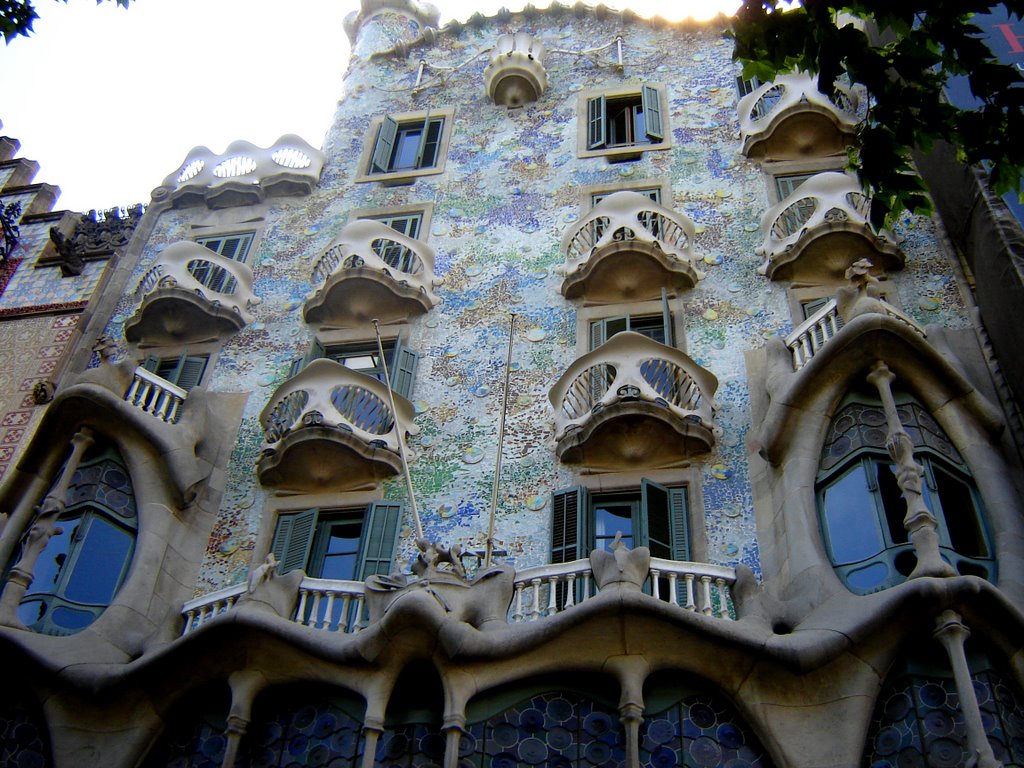

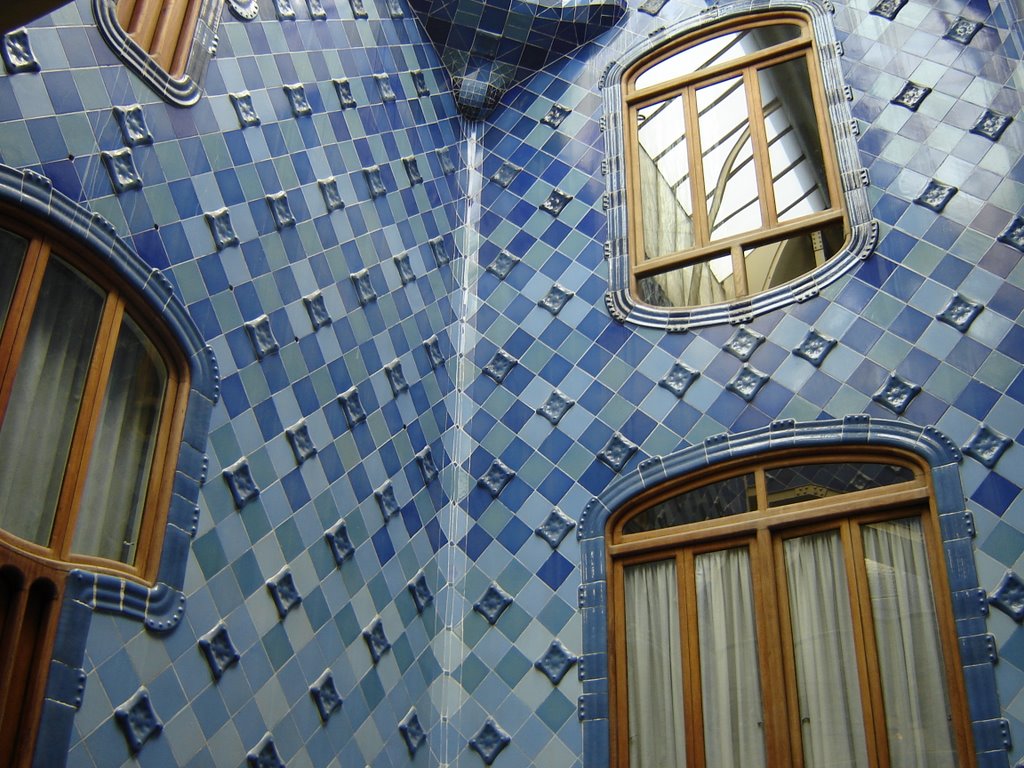
Its façade is covered with some sort of mosaic of different colours and has no straight lines. Windows, floors, the roof, the chimneys, are all wave-shaped. We entered and first visited the stairs and the roof (the main floor was for some reason closed on that day, so we had to come back on Sunday, cause we absolutely wanted to see the whole of the building). The stairs are decorated with blue tiles, their colour being more intense from up to down. In the middle, there’s a tiny elevator designed by Gaudi too. But we took the stairs to admire the “blueness” of the staircase. It definitely felt like a piece of sea inside of a house.
Then we went up to the attic. Wow! All white and the light, it was so amazing! Here again, no straight lines, only curves and arcs and white light and a nice breeze coming out of the walls. No walls in that house are hermetically closed, so that the whole building gives a feeling of freshness, which is really nice in a hot country like Spain!
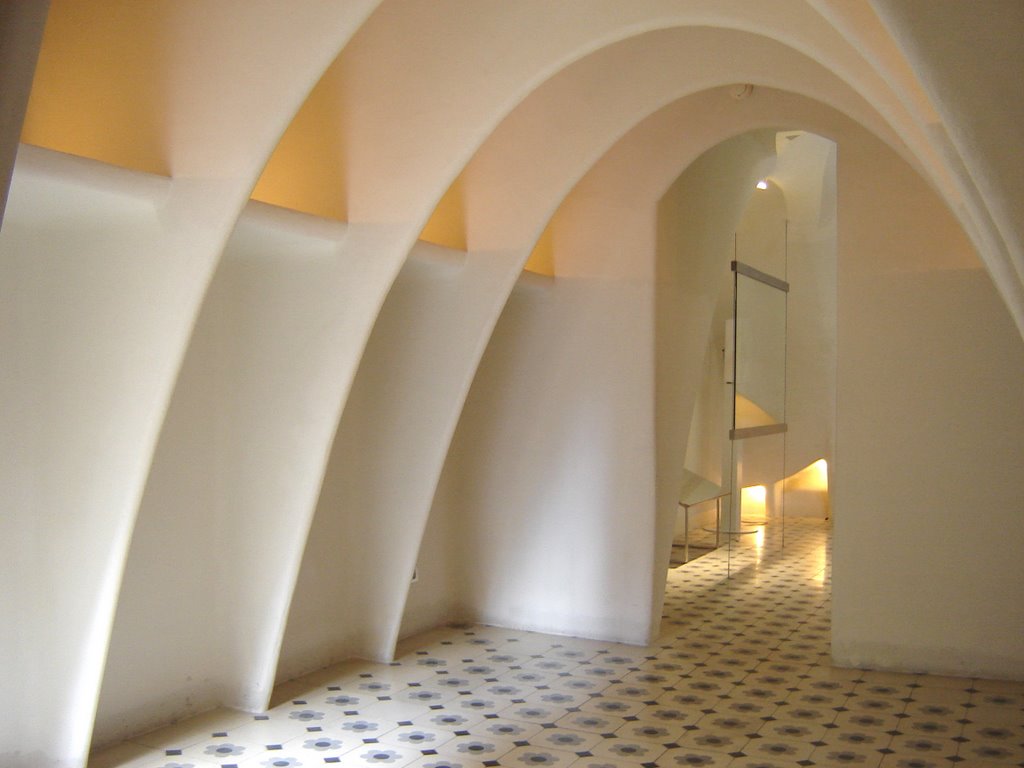
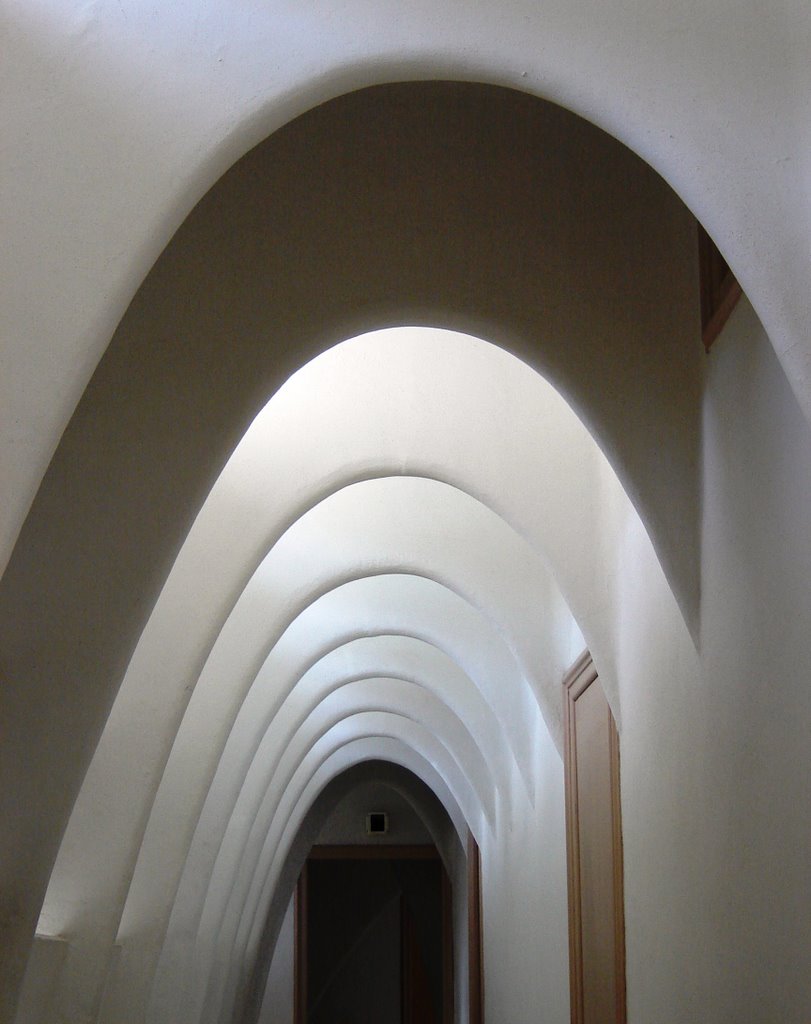
The roof is as amazing as the rest of the house.
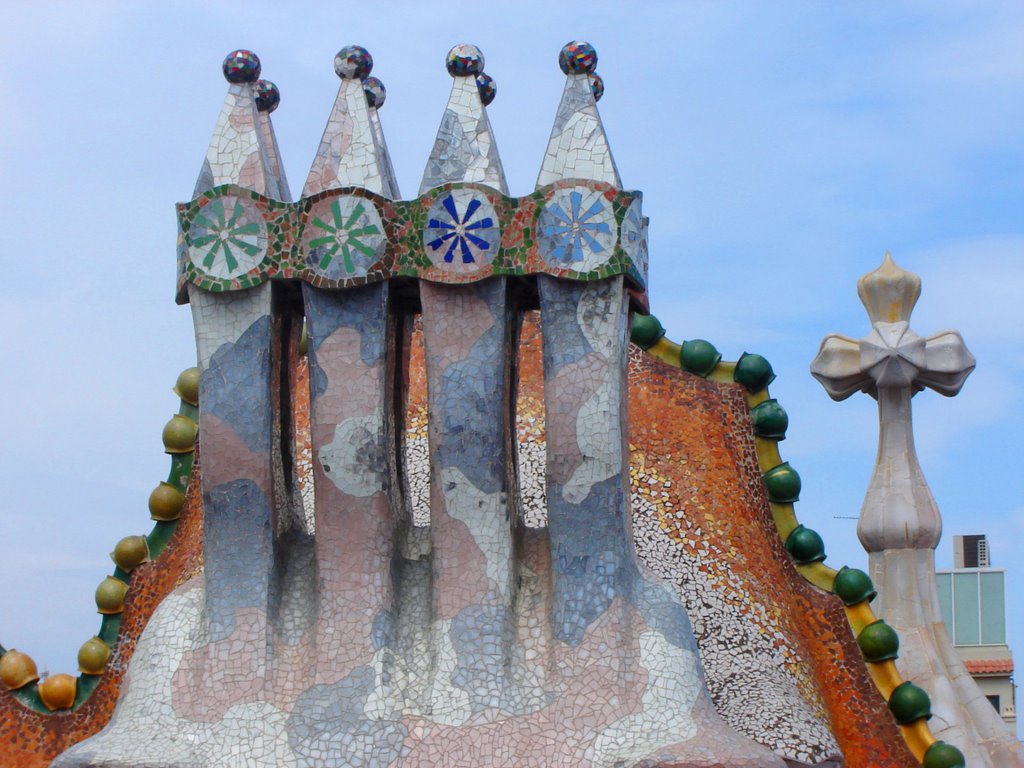
Chimneys are unique, all decorated with mosaic of different colours. Gaudi had a fabulous imagination…and a chance to realize his fantasies!
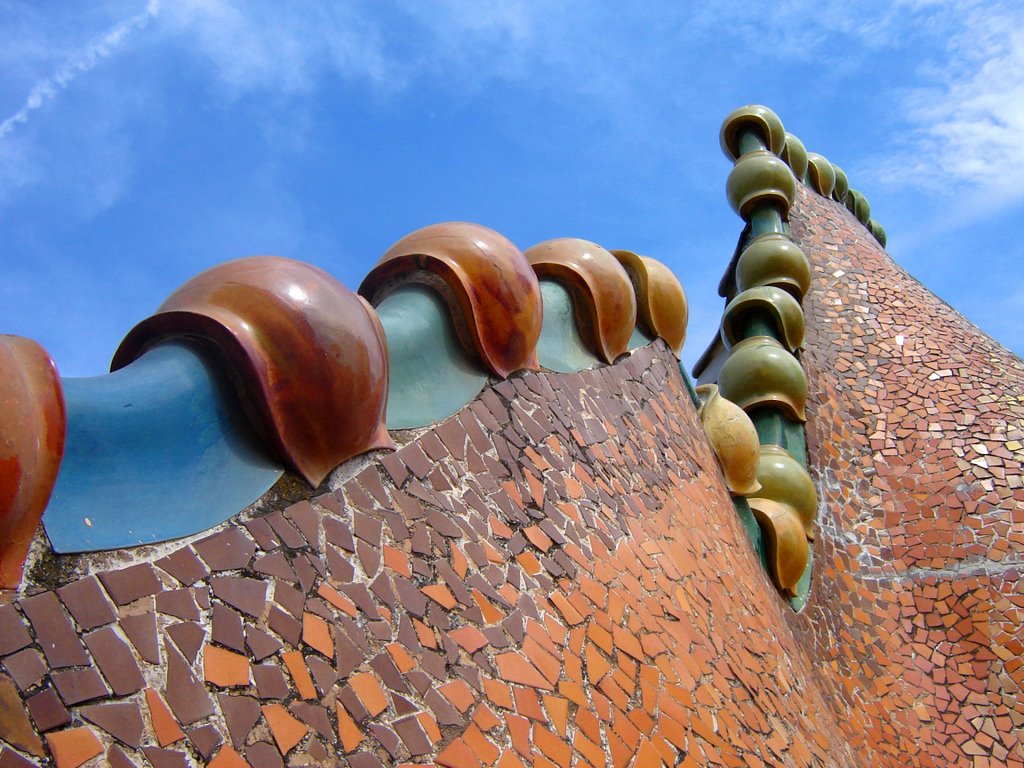
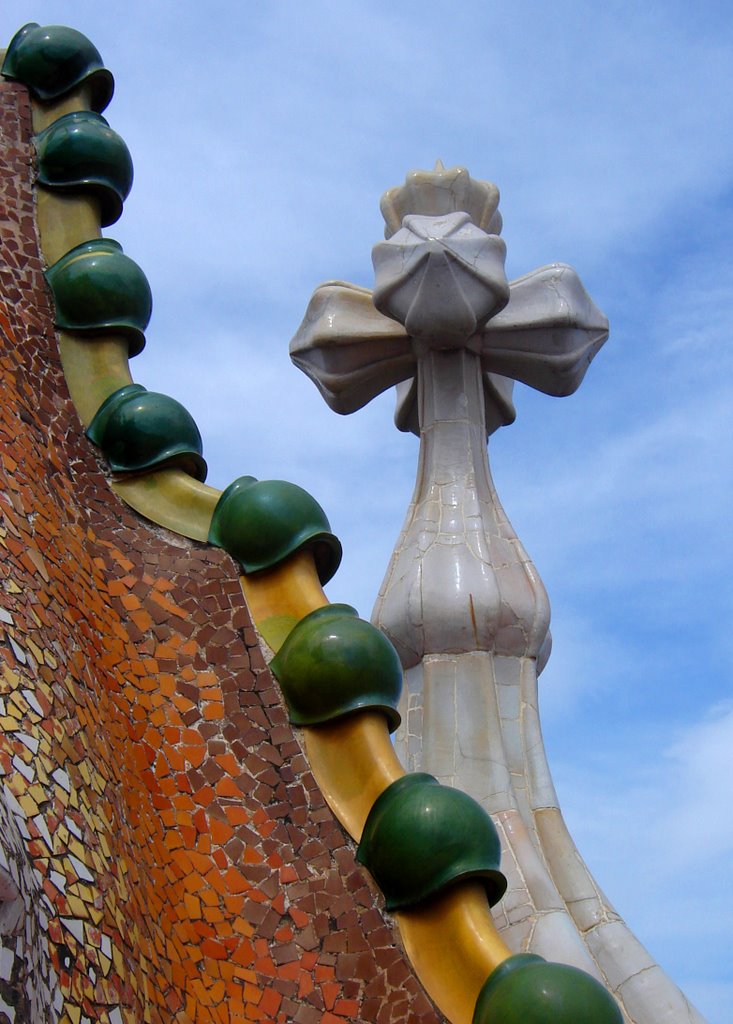
Another funny thing is that Gaudi didn’t have a plan of the construction, just a few hand-made drawings which he modified constantly as construction went on. Must’ve been tough to work with him!

After Casa Battllo, we kept on walking on Passeig de Gracia, and in a few minutes were facing another, bigger house undoubtedly designed by Gaudi, too.

It turned out to be La Pedrera, the largest civil building realized by Gaudi. It was commissioned by Pedro Milà i Camps, a rich businessman who was impressed by the Casa Battló. Here again, not a single straight line is used, which we could see when we went up on the roof, cause it’s all of different levels, which makes it hard to walk on! You can only visit the attic of the building, where a Gaudi museum is currently situated. We walked through it and learned lots about the architect. Another good thing about tourism in Barcelona is that free audio guides come together with the entrance tickets, which justifies a bit better really expensive price of the tickets to Gaudi apartments. La Pedrera is not as colourful as Casa Battllo, but not less impressive. It doesn’t have a single wall, only arcs of different shapes and lengths that carry the weigh of the roof in a genius and simple way. The roof has a number of weird-looking chimneys, even bigger than those on Casa Battllo.
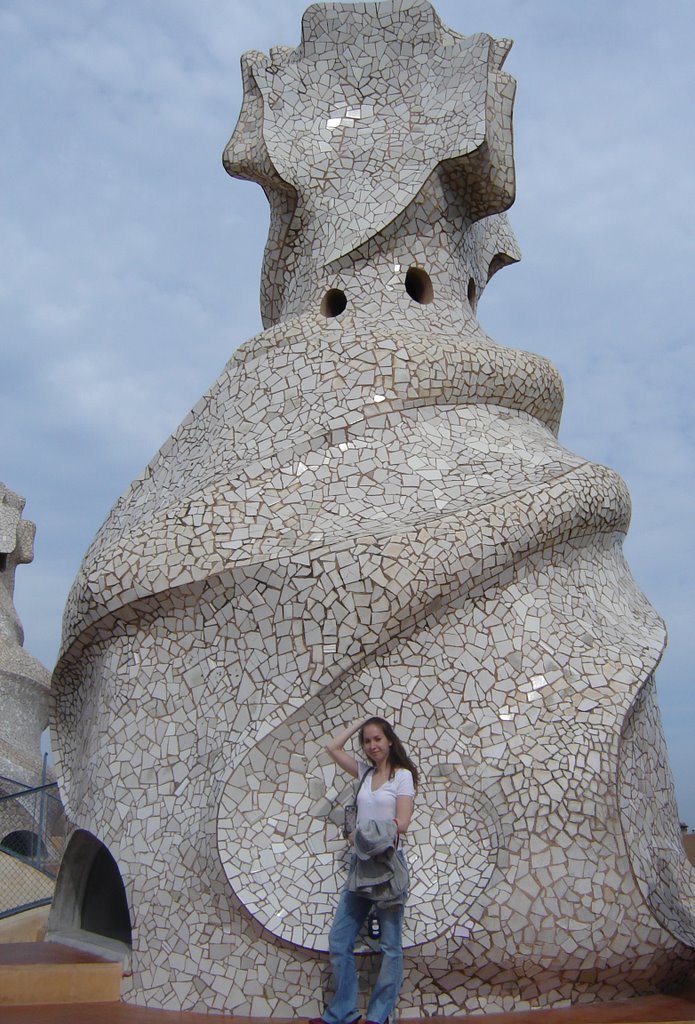
I was impressed.

After sight-seeing we returned to the hotel and after a short break went to have dinner near Maria del Mar cathedral. A Spanish friend of my sister told us later that this was the bar district of the city. It indeed looked pretty animated at night. The dinner was good, though I wouldn’t call myself a fan of Mediterranean food. But my sister who’s planning to start learning Spanish next year started that night by learning some important stuff as “la cuenta” (the bill) and “pa amb tomaquet” (Catalan tomato bread that goes with any dish: a toast with garlic, olive oil and tomato on it, is pretty good).

Saturday, April 29, 2006

Friday Night Fever with Pari Roller

Yesterday I realized one of my dreams: joined the Friday Night Fever in Paris. It's the roller skating event in Paris every Friday night. Hundreds of people skate together in the streets of Paris... It is SO great! It goes pretty fast, and it's so fun! The routes are pretty well chosen, and it changes every week. It's from 10 pm to 1 in the morning.
We went by Monparnasse, the Seine, Hôtel de Ville, stopped at Place Vendôme for a short break, went up to Monmartre and down to the Tour Eiffel...
The staff blocks the streets, so there's no cars, and people take pictures of skaters when they pass by. The "ambiance" is really good, and view & speed are just excellent!

It was my initiation, and I already became Fever-addict, can't wait for the next time!

Paris is definitely one of the best places in the world for roller skating.

Saturday, April 22, 2006

Spring in Paris...

... is amazing!


Maintenant, le printemps est vraiment là, le soleil devient chaud, les gens dans la rue enlèvent leurs habits de deuil et se changent en couleurs de la vie, couleurs du printemps. Cette semaine de vacances de Päques, il y avait principalement des touristes dans les rues parisiennes, surtout des italiens. Je devrais apprendre l'italien, depuis le temps que j'ai ce projet...mais entre la Chine, les cours et bientôt le stage, ça ne laisse pas beaucoup de temps et c'est dommage!

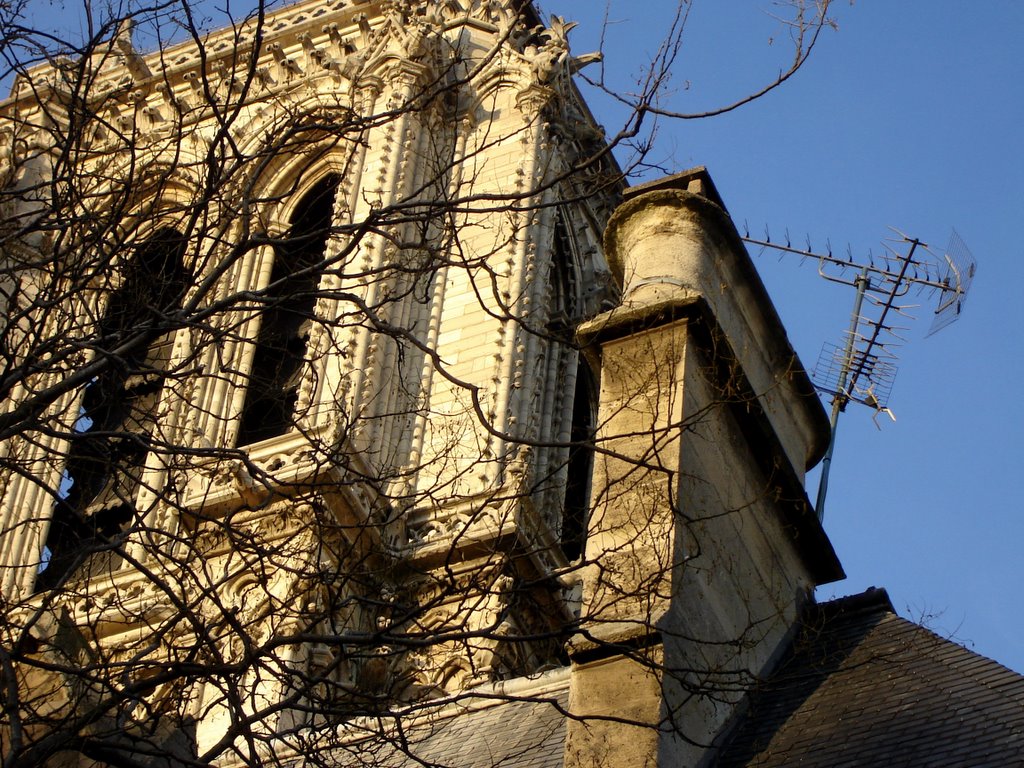
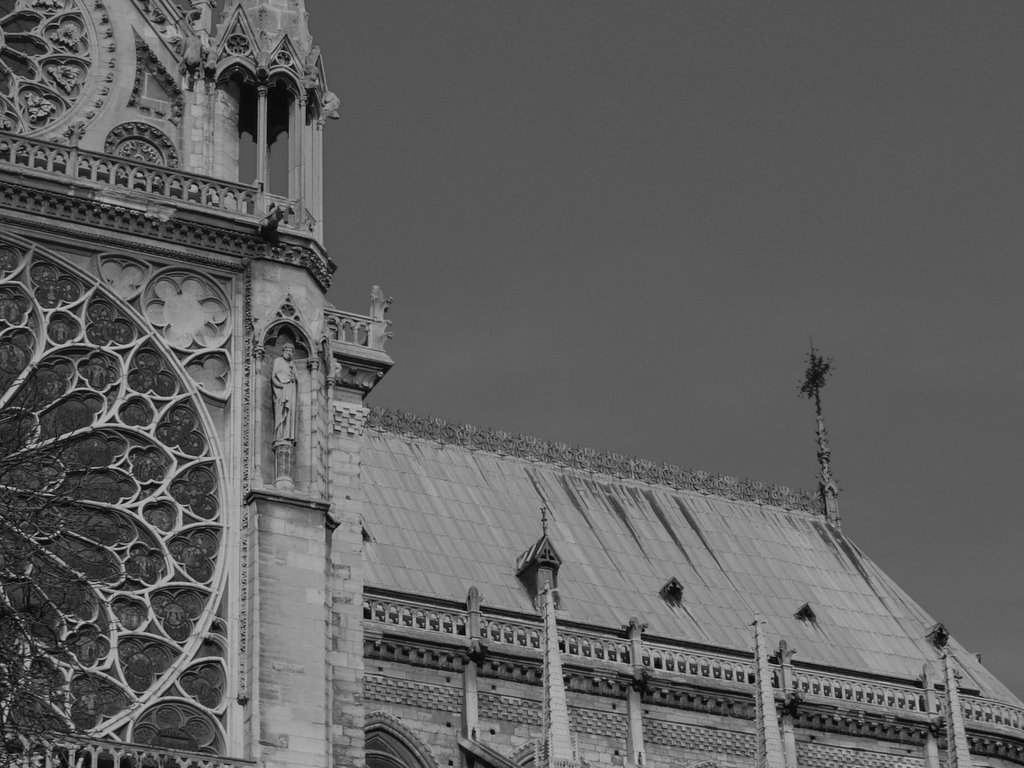
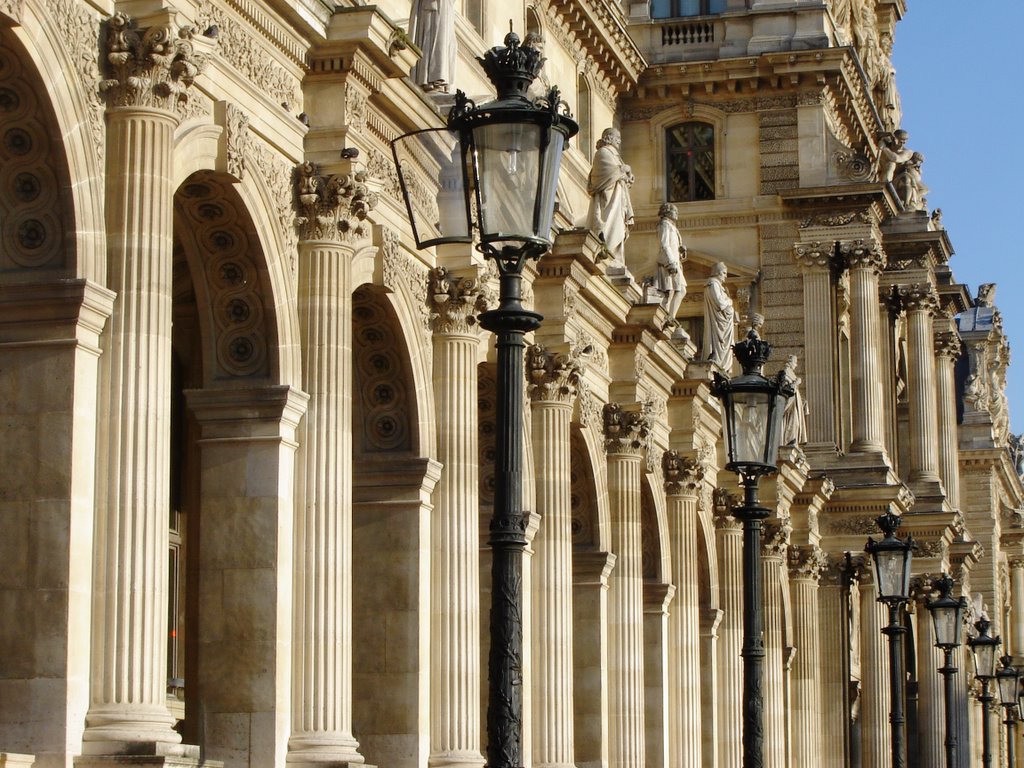
enfin, voici quelques photos de mon endroit préféré dans Paris:


Tuesday, April 11, 2006

Паркер : как ручка стала знаменитостью

В последнем Эксперте интереснейшая статья про success story Паркера:

"Паркер вовремя понял очень непростую вещь: важно научиться изготавливать качественный и даже уникальный товар — но еще важнее уметь его продать. Он был одним из первых гениев маркетинга, заставив рекламировать свои ручки тех, кто пишет ими историю."

Ручки Паркер впервые заставили говорить о себе, когда Пуччини, чрезвычайно популярный в то время в Америке, не стал делать секрета из того, чем именно он писал свою новую оперу «Богема»...

Но Паркер ставил также на оригинальность и эксклюзивность стоей продукции:
Например ручка "Чёрный Гигант" (Black Giant)благодаря внушительным размерам хорошо смотрелась на письменных столах тех самых философов и полководцев, что еще сто лет назад прекрасно удовлетворяли свои нужды гусиными перьями.
А модель Duofold, которую называли просто Big Red прочно укрепила славу и эксклюзивность ручек Паркера тем, что была...оранжевого цвета!! см. журнал Вещь

Позже Паркер стала национальным символом в американской политике: по счастливой случайности Эйзенхауэр именно ею подписал в Реймсе капитуляцию германских вооруженных сил. С тех пор боссы компании тщательно заботились о том, чтобы при подписаниях важнейших исторических документах в руках хотя бы американского представителя был именно Parker.
"Росчерком Parker 75 положено начало конца вьетнамской войне в Париже в 1973-м, подписаны советско-американские Договор о ликвидации ракет средней дальности в 1987-м, договоры СНВ-1 и СНВ-2 в 1991-м и 1993-м соответственно. В Вашингтоне менялись президенты, а в Москве — не только лидеры, но и государственный строй, но орудия дипломатического труда оставались неизменными. Правда, если Парижские соглашения по Вьетнаму подписывались обычной ручкой массового производства, то для Рейгана, Буша-старшего, Горбачева и Ельцина изготавливались специальные, с отделкой из серебра."

Monday, April 10, 2006

Un coucher de soleil surréaliste

J'ai de la chance d'observer tous les soirs de ma fenêtre le coucher de soleil. Hier soir il a été vraiment surréaliste!


Закат в это воскресенье был не закат, а пожар на горизонте...

Как тяжело ходить среди людей
И притворяться непогибшим,
И об игре трагической страстей
Повествовать ещё не жившим.

И, вглядываясь в свой ночной кошмар,
Строй находить в нестройном вихре чувства,
Чтобы по бледным заревам искусства
Узнали жизни гибельной пожар!


Фет, 1910

Wednesday, April 05, 2006

Это был просто танец

Собери меня в букетик
Из несорванных цветов,
Из отдельных, посторонних,
Самых первых снов;
Ты сложи меня по ноткам
Из осколочков души...
Шаг за шагом,
С поворотом,
Только не спеши.

Ты найди меня случайно
В отражении зеркал;
Словно мы одни
И опустевший многолюдный зал...
Разве может оборваться
Эта тоненькая нить,
Если можно плакать и смеяться,
Но не говорить?...

Это был просто танец
На рисунке паркета,
Приближенье к тайне
Под двумя лучами света.
Это было дыханье
Чёрно-белого шёлка,
И движенье ткани
Рук твоих касалось только...

Sunday, April 02, 2006

Treasure hunt in Monmartre with MELT

This Saturday MELT (ESSEC International students association) organized a Treasure hunt in Paris, Monmartre. That was really fun! and really well organized: merci MELT!

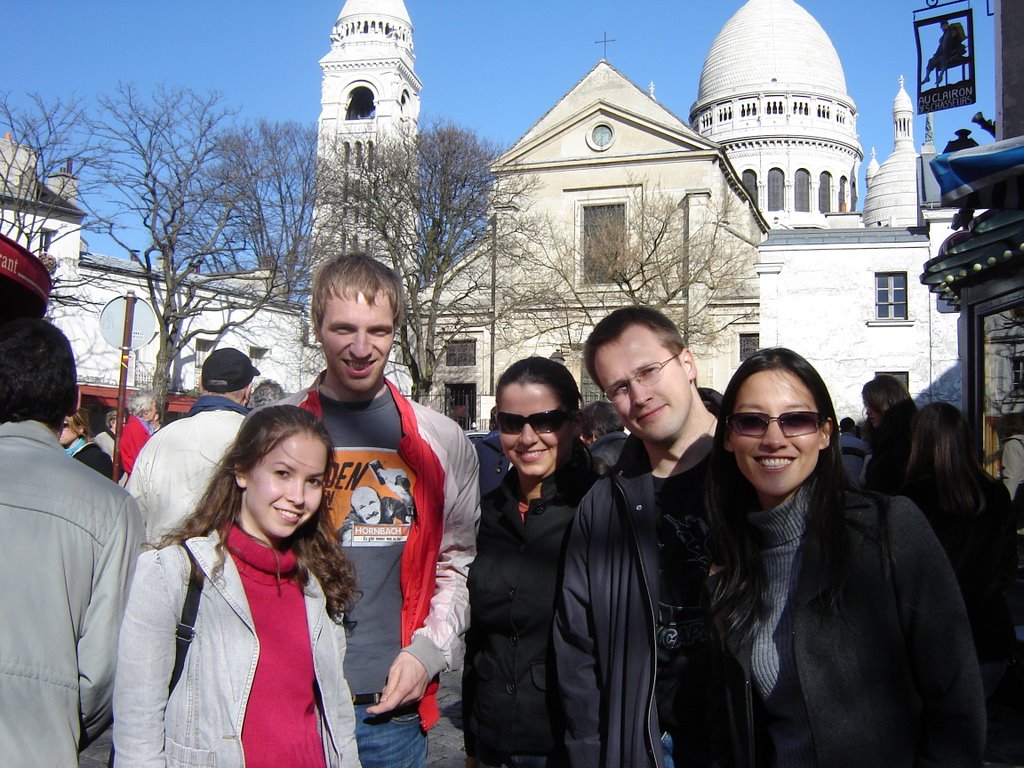
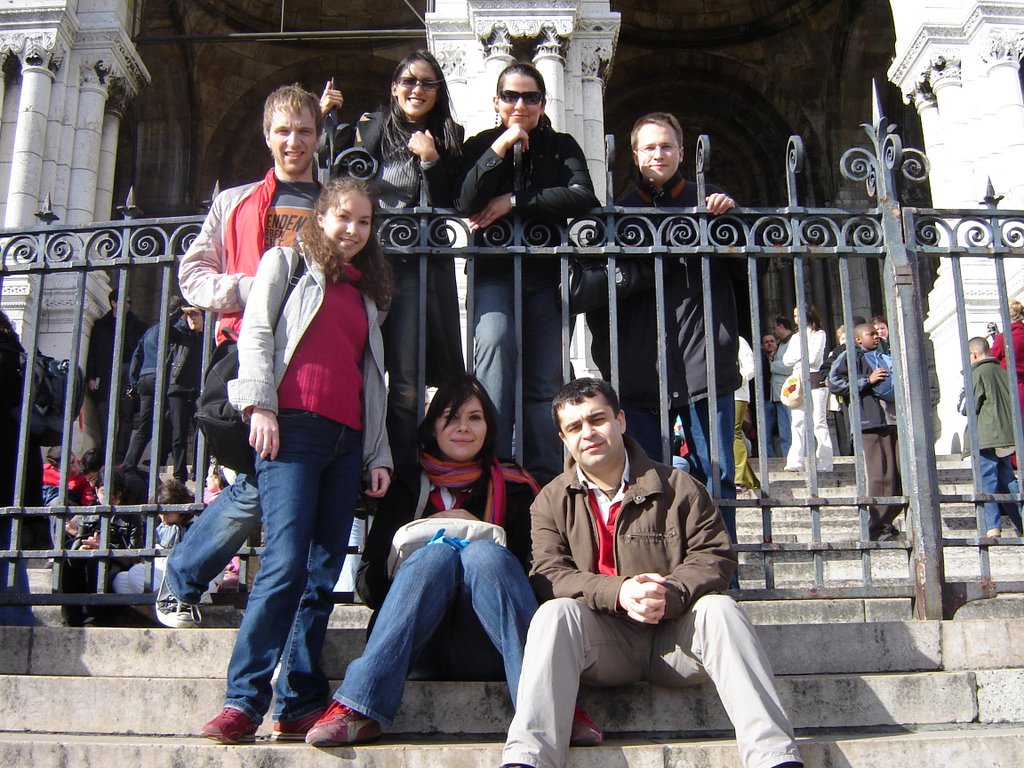
There were 5 teams of 5-6 people, all from different countries, mine is on the picture: people from all over the world, Russia, Thailand, Austria, Finland...
Each team had to resolve quizes, prove our artistic talents(on the picture, Sandra, our team's chief artist), get hints and walk around the area of Monmartre to discover the ultimate place.

It lasted about 3 hours, we explored the area between Pigalle and Sacré-Coeur, learned stuff about mills (cause there are real mills in Monmartre!!) and streets, saw the grocery shop from the famous movie "Amelie from Monmartre", and had a lot of fun! This is also one of the most romantic places in Paris, and early spring sun made it even more beautiful.

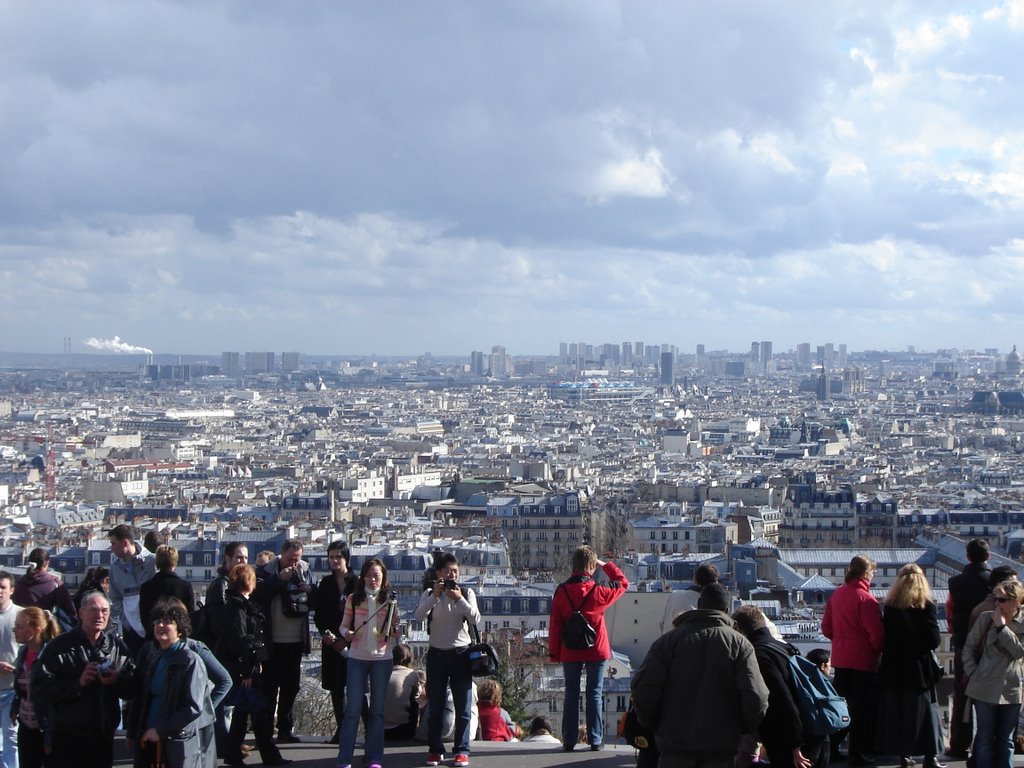
(spring view from Sacré Coeur)

Tuesday, March 28, 2006

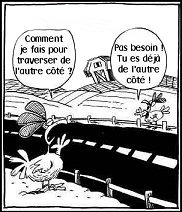
Курица переходит дорогу. Зачем? (по многочисленным просьбам вот перевод про курицу!)

Декарт: Чтобы перейти на другую сторону.

Платон: В поисках лучших условий, Правда на другой стороне.

Аристотель: Это в природе куриц - переходить через дорогу.

Карл Маркс: Это было исторически неизбежно.

Рональд Рейган: Я забыл.

Гиппократ: Из-за избыточного содержания желчи в поджелудочной железе.

Мартин Лютер Кинг: Я представляю себе мир, в котором все курицы будут свободно переходить через улицы, и никто не будет спрашивать зачем они это сделали.

Моиcей: И Бог сошел с небес и сказал курицам - вы должны перейти дорогу. И курицы перешли дорогу и отметили это событие большим праздником.

Фокс Малдер: Вы видели их переходящими через дорогу своими собственными глазами. Сколько еще куриц должны перейти улицу чтобы вы поверили в это?

Макиавелли: Смысл в том, что курицы перешли дорогу! Кого волнует зачем? Окончание перехода оправдывает любой мотив, который у них был.

Оливер Стоун: Вопрос не в том-почему курицы перешли дорогу? Скорее всего надо спросить - кто переходил дорогу пока мы наблюдали за тем, как ее переходят курицы.

Чарльз Дарвин: Курицы в течение долгого периода времени прошли через естественный отбор таким образом,что они генетически предрасположены переходить улицы.

Альберт Эйнштейн: Курицы переходили дорогу или дорога двигалась под курицами - это зависит от вашего восприятия.

Эрнест Хэмингуэй: Чтобы сдохнуть. Промокнуть под дождем и сдохнуть.

Гераклит: Нельзя дважды перейти одну и ту же дорогу...

Шарль де Голль: Курица уже перешла через дорогу, но она ещё не перешла через автобан!

Билл Клинтон: Клянусь Конституцией, что между этой курицей и мной ничего не было!

Форест Гамп: RUN, CHICKEN, RUN !!!

Генри Форд: Курица может переходить через что угодно при условии, что она чёрная.

Галилей: И всё-таки она её переходит.

Friday, March 24, 2006

The Strawberry, или притча о землянике

There was once a man who was being chased by a ferocious tiger across a field. At the edge of the field there was a cliff. In order to escape the jaws of the tiger, the man caught hold of a vine and swung himself over the edge of the cliff. Dangling down, he saw, to his dismay, there were more tigers on the ground below him! And, furthermore, two little mice were gnawing on the vine to which he clung. He knew that at any moment he would fall to certain death. That's when he noticed a wild strawberry growing on the cliff wall. Clutching the vine with one hand, he plucked the strawberry with the other and put it in his mouth.
He never before realized how sweet a strawberry could taste.


Шел человек по полю, и не знамо откуда, за ним погнался тигр. Человек стал убегать. Так добежали они до обрыва. На счастье человека, с обрыва свисала засохшая ветвь виноградника. Человек стал спускаться по ней, но внизу его ждал другой тигр. Да тут еще семейка полевых мышей вовремя решили полакомиться этой лозой. И вдруг человек увидел на расстоянии вытянутой руки землянику. Ах как вкусна была та земляника!

Thursday, March 23, 2006

Poulet

(petite dédicace: merci Anthony, ça m'a bien fait rire après une épuisante journée de quiz + entretien!)


La scène : un poulet au bord d'une route. Il la traverse.

La question : Pourquoi ce poulet a-t-il traversé la route ?


RENÉ DESCARTES : Pour aller de l'autre côté.

PLATON : Pour son bien. De l'autre côté est le Vrai.

ARISTOTE : C'est la nature du poulet de traverser les routes.

KARL MARX : C'était historiquement inévitable.

CAPTAIN JAMES T. KIRK : Pour aller là où aucun autre poulet n'avait été auparavant.

HIPPOCRATE : En raison d'un excès de sécrétion de son pancréas.

MARTIN LUTHER KING Jr : J'ai la vision d'un monde où tous les poulets seraient libres de traverser les routes sans avoir à justifier leur acte.

MOÏSE : Et Dieu descendit du Paradis et il dit au poulet : "Tu dois traverser la route". Et le poulet traversa la route. Et Dieu dit que cela était bon.

NICOLAS MACHIAVEL : L'événement important, c’est que le poulet ait traversé la route. Qui se fiche de savoir pourquoi ? La fin en soi de traverser la route justifie tout motif, quel qu'il soit.

SIGMUND FREUD : Le fait que vous vous préoccupiez de ce que le poulet ait traversé la route révèle votre fort sentiment d'insécurité sexuelle latente.

BILL GATES : Nous venons justement de mettre au point le nouveau "Poulet Office 2003" qui ne se contentera pas seulement de traverser les routes, mais couvera aussi des oeufs, classera vos dossiers importants, etc.

BOUDDHA : Poser cette question renie votre propre nature de poulet.

GALILÉE : Et pourtant, il la traverse.

ÉRIC CANTONA : Le poulet, il est libre, le poulet. Les routes, quand il veut, il les traverse.

CHARLES DE GAULLE : Le poulet a peut-être traversé la route, mais il n'a pas encore traversé l'autoroute.

JACQUES CHIRAC : Parce que j e n'ai pas encore dissous la route.

L'ÉGLISE DE SCIENTOLOGIE : La raison est en vous, mais vous ne le savez pas encore. Moyennant la modique somme de 1500 euros par séance, plus la location d'un détecteur de mensonges, une analyse psychologique nous permettra de la découvrir.

BILL CLINTON : Je jure sur la Constitution qu'il ne s'est rien passé entre ce poulet et moi.

EINSTEIN : Le fait que ce soit le poulet qui traverse la route ou que ce soit la route qui se meuve sous le poulet dépend uniquement de votre référentiel.

ZEN : Le poulet peut vainement traverser la route, seul le Maître connaît le bruit de son ombre derrière le mur.

JEAN-PIERRE RAFFARIN : Le poulet n'a pas encore traversé la route, mais le gouvernement y travaille.

JEAN ALESI : Je ne comprends pas. Théoriquement, le poulet, il avait le temps de passer.

NELSON MONTFORT : J'ai à côté de moi l'extraordinaire poulet qui a réussi le formidable exploit de traverser cette superbe route : "Why did you cross the road ?" "Cot cot !" "Eh bien, il dit qu'il est extrêmement fier d'avoir réussi ce challenge, ce défi, cet exploit. C'était une traversée très dure, it was hard to cross, wasn't it, mais il s'est accroché"

RICHARD VIRENQUE : C'était pas un lapin ?

KEN LE SURVIVANT : Peu importe, il ne le sait pas, mais il est déjà mort.

JEAN-CLAUDE VANDAMME : Le poulet, la road il la traverse parce qu'il sait qu'il la traverse, tu vois, la route c'est sa vie et sa mort, la route c'est Dieu, c'est tout le potentiel de sa vie et moi Jean-Claude Super Star quand je me couche dans Time Cop, quand le truck arrive je pense à la poule et à Dieu et je fusionne avec tout le potentiel de la life de la road ! Et ça, c'est beau !

FOREST GUMP : RUN, CHICKEN, RUN !!!

STALINE : Le poulet devra être fusillé sur-le-champ, ainsi que tous les témoins de la scène et dix autres personnes prises au hasard, pour n'avoir pas empêché cet acte subversif.

GEORGES W. BUSH : Le fait que le poulet ait pu traverser cette route en toute impunité malgré les résolutions de l'ONU représente un affront à la démocratie, à la liberté, à la justice. Ceci prouve indubitablement que nous aurions dû déjà bombarder cette route depuis longtemps. Dans le but d'assurer la paix dans cette région. Pour éviter que les valeurs que nous défendons ne soient une fois de plus bafouées par ce genre de terrorisme, le gouvernement des États-Unis a décidé d'envoyer 17 porte-avions, 46 destroyers, 154 croiseurs, appuyés au sol par 243 000 G.I. et dans les airs par 848 bombardiers, qui auront pour mission, au nom de la liberté et de la démocratie, d'éliminer toute trace de vie dans les poulaillers à 5000 km à la ronde, puis de s'assurer par des tirs de missiles bien ciblés que tout ce qui ressemble de près ou de loin à un poulailler soit réduit à un tas de cendres et ne puisse plus défier notre nation par son arrogance. Nous avons décidé qu'ensuite ce pays sera généreusement pris en charge par notre gouvernement, qui rebâtira des poulaillers suivant les normes de sécurité en vigueur, avec à leur tête, un coq démocratiquement élu par l'ambassadeur des États-Unis. En financement de ces reconstructions, nous nous contenterons du contrôle total de la production céréalière de la région pendant trente ans, sachant que les
habitants locaux bénéficieront d'un tarif préférentiel sur une partie de cette production, en échange de leur totale coopération. Dans ce nouveau pays de justice, de paix et de liberté. Nous pouvons vous assurer que plus jamais un poulet ne tentera de traverser la route, pour la simple bonne raison qu'il n'y aura plus de routes et que les poules n'auront plus de pattes. Que Dieu bénisse l'Amérique !! ...

Monday, March 20, 2006

Горький, «Детство»

"... и смотрел, как странно и подозрительно изменяется лицо часовых дел мастера. Оно у него было масленое, жидкое, таяло и плавало; и если он улыбался, толстые губы его съезжали на правую щёку, и маленький нос тоже ездил, как пельмень по тарелке. Странно двигались большие, оттопыренные уши, то приподнимаясь вместе с бровью зрячего глаза, то сдвигаясь на скулы, - казалось, что если он захочет, то может прикрыть ими свой нос, как ладонями. Иногда он, вздохнув, высовывал тёмный, круглый, как пест, язык, и, ловко делая им правильный круг, гладил толстые масленые губы. Всё это было не смешно, а только удивляло, заставляя неотрывно следить за ним..."

Saturday, March 18, 2006

Кто высоты боится, сюда не нажимать!


Как есть по-китайски: то есть палочками...

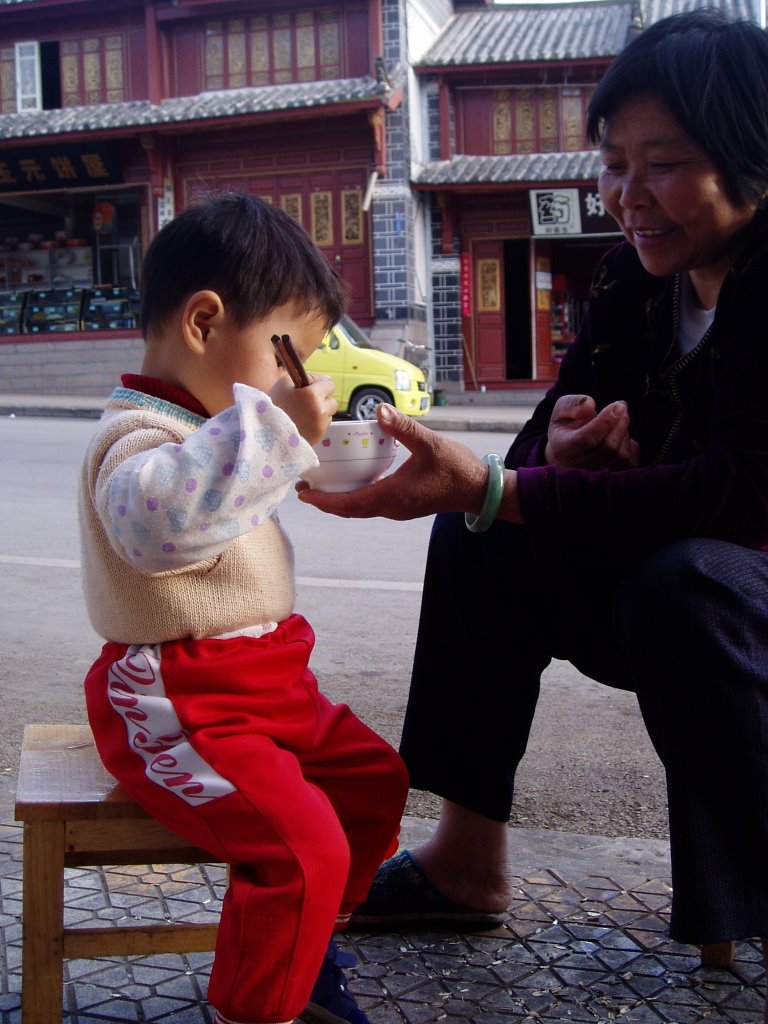
Есть палочками – первое, с чем сталкиваешься в Китае. Вилок у них там нет, только разве что в больших дорогих ресторанах. Но когда есть хочется, все быстро учатся! Это очень смешит китайцев. Когда вы первый раз кушаете в компании китайца, он, эстет, исподтишка в первую очередь посмотрит, как вы владеете палочками, и если хорошо, обязательно сделает вам комлимент и почуствует себя пощрённым за ваше уважение к его культуре! Так что учитесь!


Палочки бывают разные, и чем лучше ресторан, тем они красивее. Самые простые – палочки деревянные, одноразовые. Дальше идут пластиковые, и из разных других материалов, красиво расписанные, тяжёлые, с подставочками под них. Интересно, что у корейцев нет деревянных палочек, все пластмассовые. Это потому, что в древности недоброжелатели, желавшие смерти врагу, вымачивали концы деревянных палочек в яде, убивавший их хозяина! С тех пор корейцы не используют деревянные палочки. Но надо сказать, что на первых порах, а также для макарон, они гораздо удобнее, чем скользкие пластиковые, это я на своём опыте убедилась!

У китайцев в еде тоже есть свой этикет, что делать можно, а чего нельзя. Вот я составила небольшой список с пояснениями.

Никогда НЕ:

- ронять палочки на пол, китайцы считают, что этот стук нехороший, т.к. может разбудить злых духов
- ни в коем случае не втыкать палочки в рис, это походит на зажжённые палочки для поминания умерших!
- не облизывать палочки!
- не тыкать ими в людей и не размахивать ими при разговоре
- не выбирать полчаса кусок из общей тарелки, вороша всю еду, а взяв, никогда не класть обратно!
- не стучать палочками по посуде

В общем, делать всё наоборот, а также:

- класть палочки на специальную подставочку, параллельно друг другу
- держать их за более толстую, обычно квадратную, сторону
- использовать разные палочки для своей миски и общих
- ложкой есть суп (понятное дело!) и макароны (в смысле палочками И ложкой, требует сноровки! Китайцы вообще не любят вещей, которые даются легко, они как дети, всё время учатся, и соответственно в первую очередь ценят людей, достигших в чём-то совершенства, пусть даже в еде макарон палочками!)
- ложкой также можно положить себе на тарелку то, что палочками есть невозможно, как например горох, бобы всякие, соусы... но не очень много, а то могут подумать, что вы боитесь, что еды не хватит!

Если вы не очень ловки в обращении с палочками, попробуйте эти упражнения:

1) есть макароны палочками! Когда научитесь, считайте, что владеете палочками превосходно! Китайцы вам будут комплименты делать...
2) есть палочками куриные крылышки, особенно если вы любите снимать шкурку...при это можно использовать только в крайнем случае ложку
3) есть палочками горох

Ну а если до таких подвигов вам ещё далеко, то вот упражнение для начинающих (хотя учит оно, в первую очередь, терпению!):
Рассыпьте на столе неварёный рис и собирайте его по рисинкам в миску, а потом обратно...если терпения не хватит, значит в Китае вам придётся трудно, особенно если вы, погорячившись, решили учить китайский!

Sunday, March 12, 2006

Анекдоты

Если ты упустил свой шанс, никогда не думай, что он последний, будут ещё и другие шансы, которые ты упустишь.

Выпущен новый одеколон "Гарри Поттер". Уничтожает запахи гари и пота.

- Чего-то ты плохо выглядишь.
- Да вот, купил недавно таблетки от желания курить...
- Ну и как, желание пропало?
- Как рукой сняло! Курю теперь без всякого желания.

На уроке физкультуры:
- Так, мальчики, кто из вас курит? Честно! Не врать!!! Так... значит, ты и ты... Ясно...
Значит, так: мы с вами покурим, остальным - пять кругов по стадиону.

- Почему у слона глаза красные?
- Для того чтобы в помидорах мог прятаться.
- Видели когда-нибудь слона в помидорах?
- Хорошо прячется, правда?

Разговор двух сотрудников на работе:
- Во второй половине дня абсолютно ничего не хочется делать.
- А в первой?
- А в первой хотелось есть.

Джоносон и Джонсон. Почувствуйте разницу...

Английский лорд после кораблекрушения
очутился на необитаемом острове. Он
построил три хижины. Через некоторое
время его обнаружили и спасли.
о моряки долго недоумевали зачем ему
три хижина? а что он ответил:
- Одна - где я живу, вторая - это мой клуб,
а третья - это клуб, который я игнорирую.

В английском ресторане:
-Что у вас сегодня на завтрак?
-Овсянка, сэр.
-А на обед?
-Овсянка, сэр.
-А на ужин??
-Овсянка, сэр.
-А завтра на завтрак???
-Запеканка, сэр.
-Урааа!!!
-Из овсянки, сэр...

Учительница заходит в класс и говорит:
— Дети, в учительской сломался ксерокс, так что сегодня будем писать
диктант! Открываем тетради и пишем! Счет-фак-ту-ра …

- Что означает "Учиться, учиться и еще раз учиться!" на практике?
- Один экзамен и две пересдачи!

В школе:
- Садись, три!
- Сижу. Тру.

Первокурсник выбирает что бы прогулять,а пятикурсник выбирает на что бы пойти

Wednesday, March 08, 2006

Do's and don't's about chopsticks

I realized that people most like to read about China on my blog. So I have to write more about it!

Today, maybe because I didn't have dinner until 10.30pm and was hungry all afternoon, the post is about food! One of the most exciting things about Chinese food is ... chopsticks of course! Hope this post will be fun for those who've already been to China and useful for those who are going there soon (je pense bien sûr à certains de mes chers classmates qui vont aller à Tsinghua, Beida ou Erwai prochainement!!)

How to eat Chinese food :

Chopsticks

Don’t:

- don’t drop chopsticks! Drop chopsticks on the floor is very impolite, because Chinese think this noise wakes up evil spirits…
- don’t plant chopsticks in your bowl with rice: it's extremely impolite, because it reminds incense for the dead…
- obviously, don’t lick your chopsticks!
- don’t use your chopsticks to point at people or when you talk
- don’t take too long to choose a piece you like from the common plate. Never put what you took back in the common dish!
- don’t use chopsticks and your bowl as a drum, i.e. make no noise when you eat

Now, what to do? All the opposite, plus:
Do:
- put your chopsticks nicely parallel to your bowl
- use different chopsticks for the common dishes and your own bowl
- use a spoon to eat soup (obvious!) or pasta (less obvious…)
- use a spoon to put some of the difficult-to-eat-with-chopsticks-food in your bowl (like beans, sauces, pasta,…), but not too much, Chinese don’t use separate individual plates, they prefer to eat from the common dishes


If you are not that good with chopsticks, try these fun exercises:

- eat spaghetti with chopsticks! (When I first came to China, on my very first day (jet lag, chopsticks skills really limited…), I was invited to a fancy lunch with some business people. And they served Chinese noodles of course! “Really delicious, isn’t it?”…Aha, but how do you eat them with two sticks???!!!)
- eat chicken wings with chopsticks with the skin when you don’t like it, and don’t cheat using your fingers to remove it! (On my first day of internship in China, we had lunch with all colleagues and the CEO. They ordered chicken wings! God surely wanted to punish me for something! 20 Chinese people around the table were looking in my mouth and observing me eating when I struggled with the two sticks, which they ordered plastic of course, to be “chic”, but they are so much more sliding than usual wooden ones…)
- eat beans with chopsticks

- Last but not least, a practical exercise, advised by a friend: use plastic chopsticks. Put some raw rice on the table and use chopsticks to collect the grains back in the bowl one by one, and then the other way. Do it as quickly as possible. Teaches you patience as well (if you don’t go crazy the first 2 minutes!)


Any comment or fun stories are welcome!

Saturday, March 04, 2006

Sun?!...

Although it's March already, it doesn't look like spring here AT ALL...Still rainy and grey. Too bad! I miss roller and sun! Some people that know me can say that I always want different things: n China I was complaining about not having enough rain, here I am complaining about not having enough sun! Oh well...
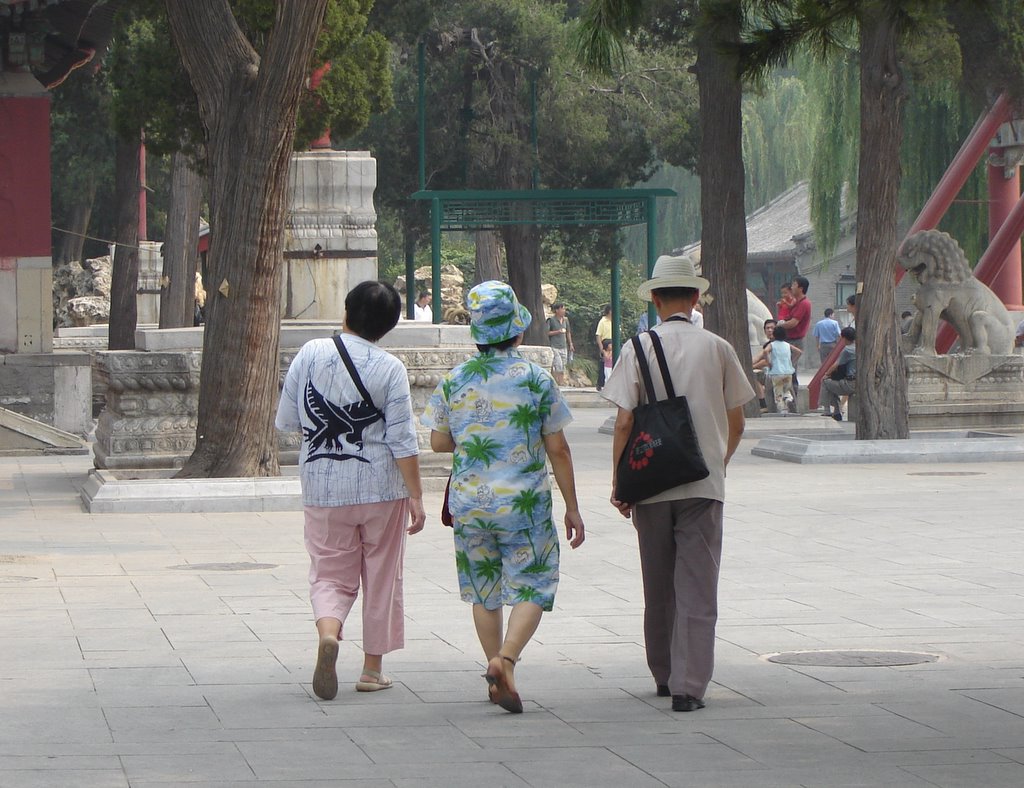
Anyways... it made me think of a picture I took in Beijing Summer Palace:


"Здесь не Гаваи, здесь лучше!" (Пекин, Летний дворец)

Friday, March 03, 2006

Chinese language alternatives to .com (link here)

= China disconnected from the standard internet!

Once again, thanx to Emlyn, who has a chance to be in China at the moment! Do I start missing China?!...

Wednesday, March 01, 2006

What's Web Office? (link here)

See also:

Directory of New Web Office Technology

Few hours later...


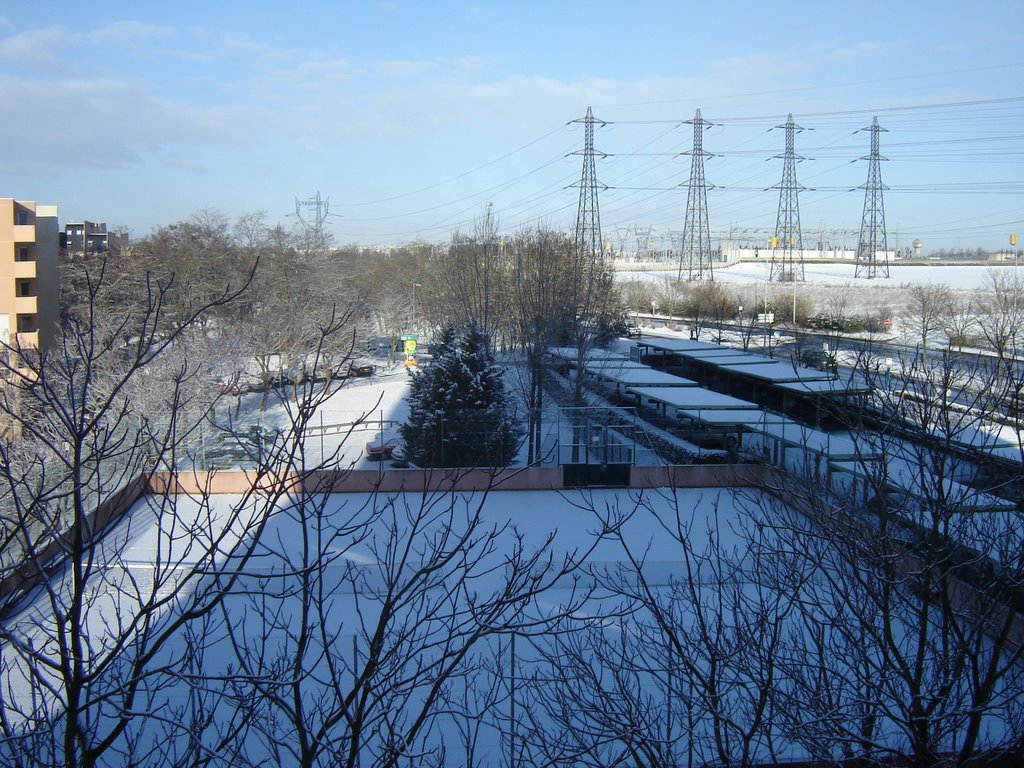
Snow in Paris!!! А в Париже снег!!!

Невероятно, но факт! Нотр-Дам под снегом заснять я, скорее всего, не успею, но вот вид из окна моего.

China: their attitudes towards us foreigners 2

I know, it took me quite a while to post this, especially given that I had this post written this Christmas...But I had quite a lot of school work recently (yes, it does happen!) and internship search and interviewing are quite time consuming as well...
But now you have it: enjoy! (there is the 3rd part coming, but I haven't written it yet, so it can take a while!)


- Even given that I grew up in Latvia, where Russians and Latvians (two very different nationalities, cf.my post of Dec 28, 2005) are coexisting in a balance which is extremely difficult to understand for foreigners, I have never been that aware of nationality or race difference as in China.
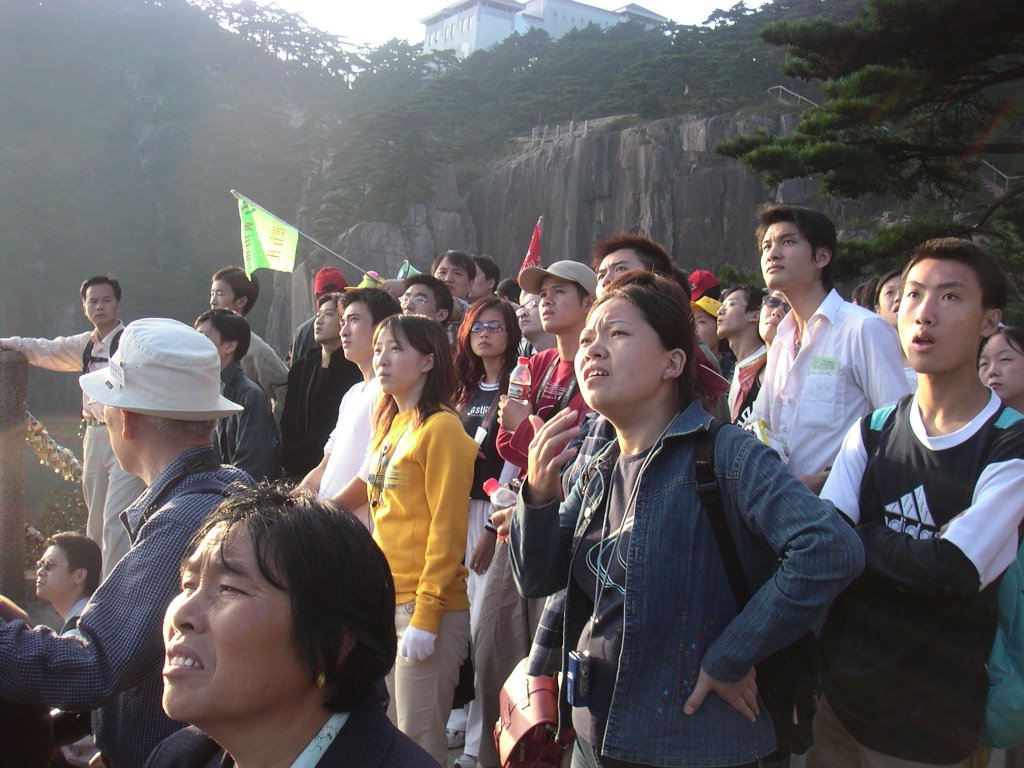
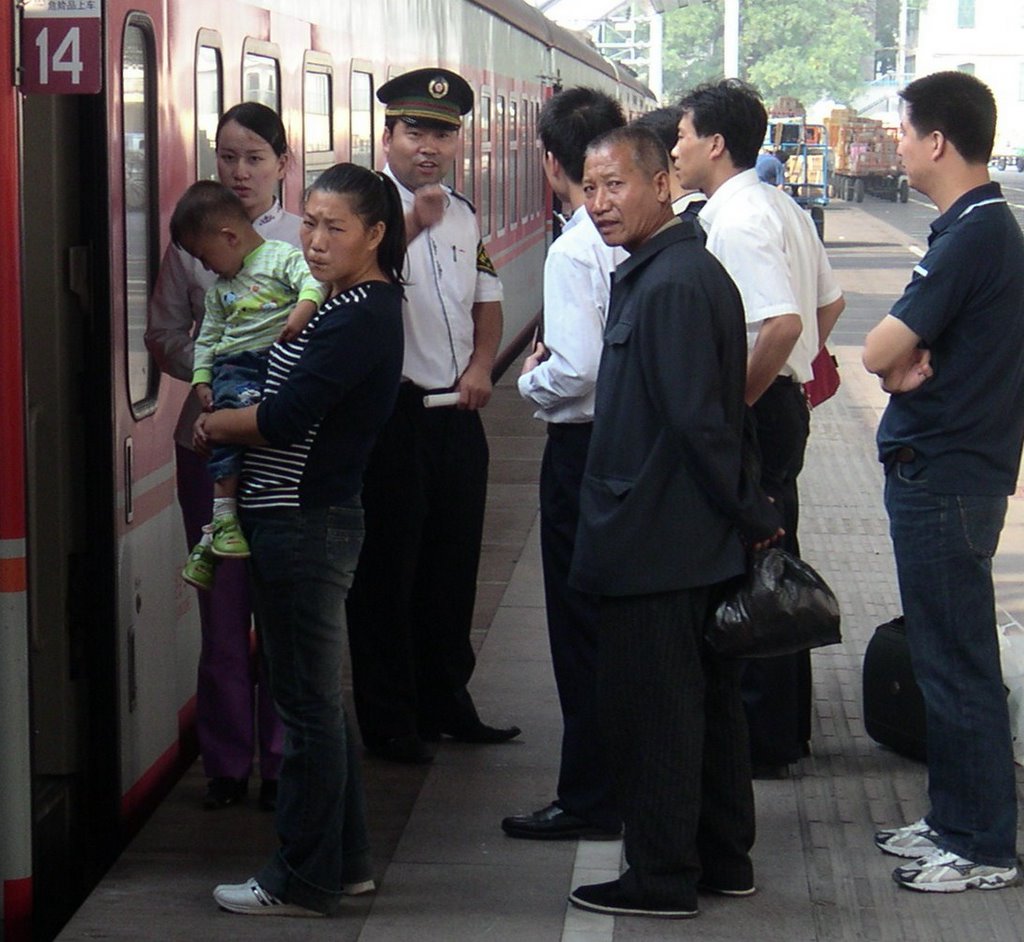
In China, I am a foreigner and I will always be. Even if I lived there for decades and spoke/wrote perfect Chinese (I wish I did!), I would remain a “laowai” (foreigner). When you are in China for the first time, you get surprised by how people stare at you, especially if you happen to be blonde;-) people stop you in the street and ask to take pictures of you. If you are a girl, first words you learn are “mei nü” and “piaoliang” (pretty). It is becoming a common thing to see foreigners on Beijing streets but there are still lots of places in China where people have never seen a white person. They are especially amazed by blond babies or small kids. A German friend of mine who lived in Beijing had two little sons, both blonds. When she was taking them for a walk, all Chinese would stop and admire “little angels”, play with them. Even, and especially, men! She told me that Chinese people don’t take babies outside, they consider that before they are one or two years old, it’s somehow bad for babies’ health to take them out. True, I almost never saw very small Chinese babies in the street.

The difference between foreigners and locals is fundamental, and appears in every aspect of everyday routine:
- one good point is that Chinese, as well as Russians by the way, usually respect foreigners more than their compatriots and regard them as “superior” in some kind
- people are more friendly to you as a foreigner (especially if you are blond and a girl)
- the bad point is that the Chinese, being good business people and sales people, set a “special” price for a foreigner. The price depends on several factors, like your level of Chinese language and knowledge of local prices and also on the way you look. A friend of mine told me that I couldn’t get cheap prices at Panjiayuan (Beijing antiques market) because I was “too well dressed”… Well, that is also a difference between Russians and Americans or some Europeans: we must be well dressed, the look is crucial!

Wednesday, February 22, 2006

Speak - read - not write!

quite an amusing article about learninig Chinese, advised by Emlyn, a Welshman in Singapour and my classmate at Tsinghua last semester.

I don't quite agree with M. Watts though. The tones are indeed difficult in the beginning, but characters are hell! After a year and a half in Beijing, I can now speak quite decently, can read almost all the characters I know, but just can't write them!! Without constant practising, I forget how to write the most simple characters, although recognising them is not a problem... It's more than frustrating not to be able to read or even pronounce words because you don't know the character.

But still, it's a great experience, the Chinese are warm-hearted, very practical indeed, but also have lots to teach us!

Monday, February 20, 2006

时间

我走得很慢,但是我从来不会后退。

I am a slow walker , but I never walk backwards .

"Как Ёжик с медвежонком протирали звезды"

"А как же иначе? - ворчал Ежик, беседуя сам с собой на верхушке сосны.- Если Медвежонок не протрет звезды, если я не протру звезды, то кто же протрет звезды?.."

Saturday, February 18, 2006

Thursday, February 16, 2006

Tsinghua exchange report

If you go to Tsinghua University on exchange, check this exchange report written by my Canadian classmates there, Muskie and Danna.

Wednesday, February 15, 2006

Ars longa vita brevis

Check out my new link ( => ) to some gorgeous pics made by a friend of mine from Riga.


Piv0t, hope you don't mind :) people should see that!

Monday, February 13, 2006

Природа - не сама по себе!

Одна из самых прекрасных вещей в Китае, это отношение людей к природе. На Западе природа как-то сама по себе, а люди и города - сами по себе. Там же природа - необходимая часть существования. Я думаю, что никогда не увижу, например, во Франции людей восхищающихся самым серым, туманным и непроглядным дождём над таким же серым и промозглым Безымянным озером. Им от такого зрелища бежать хочется подальше, а китайцы стоят себе под навесом, восхищаются этой своеобразной живой поэзией, цитируют стихи и терпеливо ждут окончания внезапной грозы, чтобы разойтись по своим делам. Или ещё, однажды вечером был прекраснейший закат, ярко-красные полосы пересекали всё небо... Прохожие останавливались, показывали друг другу и все вместе любовались красивым видом.

Sunday, February 12, 2006

Night snipers

Found on the net this English translation of a song by a famous and GOOD Russian Rock band, Nochnye Snaipery (Night Snipers).

I will howl at this
Unpredictable sky
I want to see the moon
And someday to fly

I want you to hear me saying
But you don't hear my love
And is it myself betraying
Or a test from above?

I know and I feel you don't love me
What can, what can I do?
Then closing my eyes
And walking so far away from you

To the road to the sky
I don't have wings
But I still can feel
And you were my king...

And you were my king...

La vie en mouvement

Жизнь в движении

Я тебя никогда не увижу

Солнце стынет в лазури холодной.
Расставанье всё ближе и ближе.
Мне немного печально и больно:
Я тебя никогда не увижу.

В этом мире, нелепо забавном,
Ничего не проходит бесследно.
Мы, смеясь, забывали о главном:
Всё, что было, становится бледным.

Я не верю в плохие приметы
И отчаялась быть суеверной,
Но ведь даже осколки кометы,
Разлетевшись, столкнутся, наверное.

Я быть может была сумасбродной,
И боролась и злилась – прости же.
В этом мире, столь странно холодном,
Я тебя никогда не увижу.

Wednesday, February 08, 2006

Про то, как в Китае едят груши

В самом начале, когда я только приехала в Китай, я не говорила по-китайски и соответственно не понимала, что говорят они, не говоря уже о тонкостях языка.
Однажды подруга-китаянка пригласила меня и ещё одного парня из Европы в гости. Когда мы зашли в дом, мама китаянки нас встретила с радостью и, как полагается у китайцев, предложила нам кучу еды, в том числе фрукты. Отказываться неприлично, надо есть. Друг тот мой любил груши. Мама в восторге подаёт ему самую огромную грушу. Но есть такую гигантскую грушу одному тоже невежливо. Парень попросил нож, чтобы грушу разрезать на всех. Мама сделала вид, что не слышала (отказывать неприлично!), и настояла, чтобы парень ел эту грушу сам, не разрезая. Вот тебе казус: китаянке пришлось невежливо отказать гостю, а гостю пришлось невежливо есть грушу, не поделившись с другими...
К чему я это? Сегодня открыла свой учебник китайского, а там как раз урок назывался «Почему нельзя резать груши». Так вот, оказывается по-китайски выражение «резать грушу» звучит так же, как «расставаться» (« 分梨 » и « 分离 »). Поэтому в Китае груши, особенно в гостях, не в коем случае нельзя разрезать! В обратном случае это могут интерпретировать как «У вас дома плохо, я хочу уйти», а то и ещё хужей!!!

Chinese lesson: 梨可不能分着吃 !

我刚来中国的时候不会说汉语,中国人说的话也一点儿都听不懂.
有一天我的中国朋友请了我和另外一个欧洲女孩去他们家玩儿. 我们近来了房间, 朋友的 妈妈很热情的对我们说欢迎欢迎, 请我们吃点水果. 我的那朋友她非常喜欢吃梨. 真好, 阿姨给她一个.我的朋友可不能 没有礼貌, 对我们欧洲人来说, 就是不好意思自己吃那么大的梨, 要分一下, 让别的朋友吃几块.她就问阿姨有没有袋子, 先把梨分了再吃.哟, 我们那时候不知道, 梨可不能分着吃 ! 今天看了书,有个解释, 就是 « 分梨 »和 « 分离 » 是同音. 因此,分梨是个忌讳 !

(我的中文有错误的话, 请中国朋友们帮我改正 !)


When I just came to China, I obviously couldn’t speak nor understand Chinese… At that time a Chinese friend of mine invited me and another European girl to her home. When we entered the place, my friend’s mother welcomed us and invited us to eat some fruit. My friend liked pears. But it’s quite impolite to grab a whole pear and eat it by yourself, so she asked for a knife to cut it in pieces. The mother pretended she did not hear (it’s impolite to refuse directly) and insisted on the girl eating the whole pear. What a cultural misunderstanding! The mother was embarrassed to refuse her guest’s request, and the guest was embarrassed to eat the whole fruit (quite big by the way) impolitely… Today I opened my Chinese book to finish lessons I didn’t have time to learn in China, and the name of the lesson was “Can’t cut a pear in pieces”. That’s how I remembered this small incident, which I never re-thought of before. In Chinese, “cut a pear” sounds exactly like “separate” (« 分梨 »and « 分离 »). That’s why nobody cuts pears in pieces before eating! Hopefully, my friend’s mother didn’t interpret that girl’s request like “I don’t want to stay in your home, I want to leave”…!

Tuesday, February 07, 2006

Валенки

Валенки - это заросшие, окрепшие и поседевшие мужские носки !!!

(слушая Русское Радио...)

Sunday, February 05, 2006

Fun!

Bye bye baby, baby good bye — Купи купи ребенка, ребенок хорошая покупка
I'm going to make you mine — Я иду копать тебе шахту
Manicure — Деньги лечат
I have been there — У меня там фасоль
Let it be! — Давайте есть пчел!
May God be with you — Майская хорошая пчелка с тобой
Finnish people — Конченые люди
Bad influence — Плохая простуда
Phone seller — Позвони продавцу
Good products — Бог на стороне уток
We are the champions — Мы шампиньоны
Let's have a party — Давайте организуем партию
To be or not to be — Две пчелы или не две пчелы
Just in case — Только в портфеле
I will never give up — Меня никогда не тошнит
Press space bar to continue — Космический бар прессы продолжает
I've just saw your balance sheet — Видел я ваш баланс... так себе баланс
All right — Всегда правой
Watch out! — Посмотри снаружи!
God only knows — Единственный нос бога
You feel alright — Ты справа всех чувствуешь
Oh, dear — Ах, олень

Free Sunday

Today is the first Sunday of the month, which equals to national museums being free for everybody in Paris. Nice! I met a friend from Beijing in the afternoon and we had a nice walk in Paris, despite the miserable grey weather and the cold.
Сегодня первое воскресение месяца, что означает, что музеи Парижа открыты для всех бесплатно! Я встретилась с подругой из Пекина, и мы хорошо погуляли по центру Парижа, несмотря на серую погоду и холод.

Notre-Dame de Paris


And we didn't miss the opportunity to see stuff for free and stopped by my favourite museum in Paris, Musée d'Orsay
Конечно же, я не могла упустить возможность заглянуть бесплатно в мой любимый музей в Париже, Musée d'Orsay


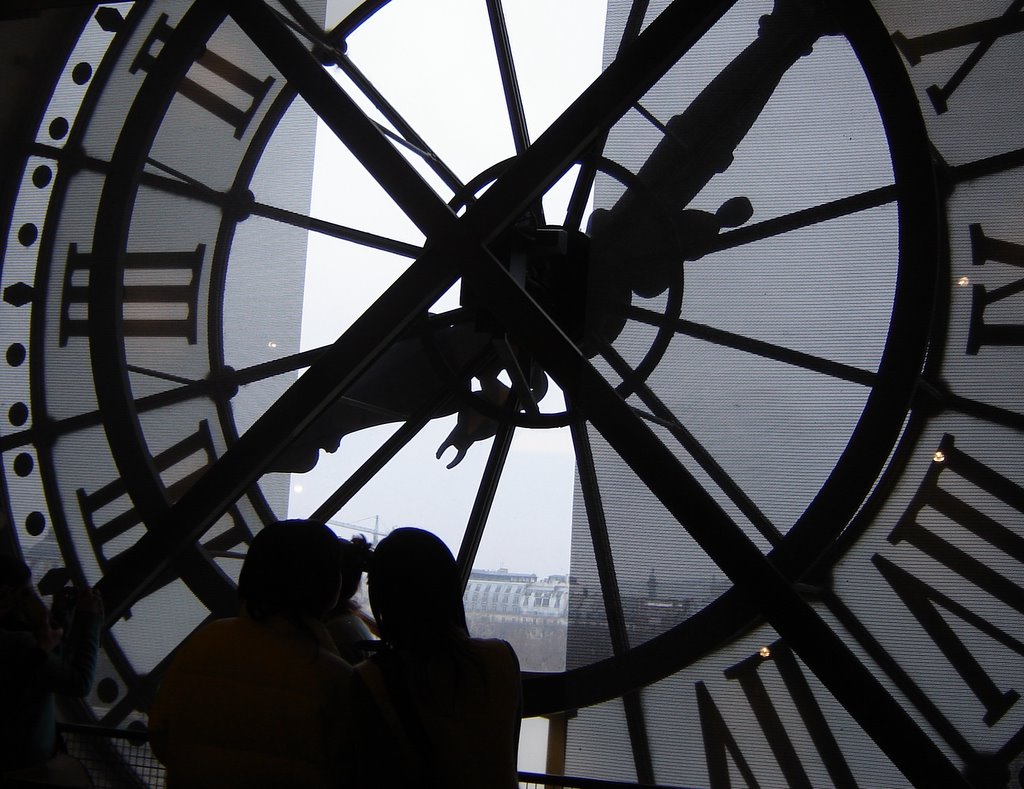
And its huge clock, view from the inside!
А это огромные часы музея, вид изнутри!

Monday, January 30, 2006

Le bout du monde, или Край света

Le bout du monde

- Oh-là-là, impossible de trouver un travail décent maintenant, on demande toujours de se déplacer à l’autre bout du monde. En plus, il faut y aller longtemps, sinon « ça ne sert à rien ». Six mois encore, bon, un VIE d’un an, ça peut passer, avec les transports, je veux bien, mais alors c’est le maximum !
- Ouais, c’est vrai. Aux entretiens, on demande toujours « Vous êtes mobile ? » « Euh…oui…entre l’Opéra et le Louvre, je suis tout à fait mobile ! »…

J’ai entendu cette conversation vendredi matin dans le bus pour aller à l’école. En écoutant ça, je me suis pensé « je ne cherche qu’une chose, c’est un emploi qui me permettrait de partir à l’autre bout du monde pour 2-5 ans…être mobile, c’est comme ça que je m’imagine au moins la première partie de ma vie professionnelle. Tendance moderne qu’ils disent. Pourtant, apparemment, les jeunes cadres dynamiques qui sortent de l’ESSEC MBA ne pensent pas tous ainsi ! »

- …En plus, on demande d’y habiter « au moins 5 ans » pour avoir « l’expérience suffisante de l’environnement et du monde de travail là-bas. » Un an maximum pour moi ! avec les avions, l’Eurostar, je pourrais peut-être survivre…

Attendez! Mais c’est LONDRES, le « bout du monde », dont ils parlent depuis le début !! En sachant qu’on est à Paris, à 1,5 h de train…
Comme quoi, la mobilité internationale n’est pas encore un réflexe pour tout le monde !


Край света

- О-ля-ля, в наши дни невозможно найти приличную работу! Работодатели вечно требуют ехать работать куда-то на край света. К тому же надолго! Полгода, ну год максимум, ещё куда ни шло, можно ездить туда-обратно.
- Ага, точно. Спрашивают на собеседовании «Вы мобильны?» «Ну...в общем, да, между Оперой и Лувром я вполне мобильна!»

Этот разговор я услышала в пятницу утром в автобусе по дороге в школу. Я ещё подумала : «А я-то как раз наоборот ищу такую работу, чтобы можно было ехать «на край света» работать, по крайней мере на пару лет. Мобильность, а по-другому нельзя, неинтересно! А ещё говорят, что это глобальная тенденция. Что-то молодые многообещающие кадры из ESSEC MBA не все так думают.

- …Да к тому же там ещё и жить надо лет пять, чтобы «полностью понять атмосферу и специфики бизнеса». Для меня лично год – максимум! Самолёты, Евростар, как-нибудь выжить можно...

Постойте, так это они ведь о ЛОНДОНЕ говорят с самого начала как о «крае света»!! Учитывая, что находимся мы в Париже, полтора часа на поезде от Лондона...
Вот тебе и мобильность!

Friday, January 27, 2006

Париж – город туристов.

Вот нашла на странице некоего А.Баттана через privetparis.com
http://news.privetparis.com/alex.php?itemid=258

10/21/04 Париж – город туристов.
Париж – город туристов.

Бедные химеры на крыше Нотр-дама! Как устали они с утра до ночи и с ночи до утра наблюдать эти жуткие толпы приезжих.
Вот по набережной от Лувра до Шатле уверенно вышагивают дети гамбургеров и кока-колы – американские туристы. Зубы оскалены, речь громогласная, мегафонная, выражение лиц такое, как у поручика Ржевского при виде Наташи Ростовой. Улыбаются, значит. Потому как вокруг красотища-то такая! Машины гудят. Скутера снуют. Карапузы-полицейские в свистки пузыри дуют. Народ туда-сюда, туда-сюда.
- Как пройти посмотреть на эту самую Башню? Вы не говорите по-английски? А на чем же вы говорите? По-французски? О, ужас, как же вы здесь живете?
В Лувре Макдоналдс. Все как дома. Впрочем, американцы везде себя чувствуют как дома. «Мой дом – моя крепость», а крепости у подданных Буша теперь повсюду...
А вот в норковых шубах-дубленках летом и зимой, в злате-серебре напоказ скачут с выпученными глазами русскоязычные турпоходцы.
- Маша, Маша! Если на Монмарт, то нам налево.
- Какой налево, мы еще половину магазинов не осмотрели...
Западная Европа вышагивает непринужденно в плащевых курточках, с планами метро наперевес. При посещении очередной достопримечательности аккуратно ставит галочку. Шесть галочек в день. Три до обеда, три после. Суббота – Диснейленд. Воскресенье – Аквобульвар. Понедельник – жирный крестик на всем и домой, к своим бешенным коровам.
По лицам китайских туристов видно, что они приехали сюда по делам.
- Так, кто по музеям – направо, кто место под Солнцем застолбить – вперед, - быстренько объявляет на ступеньках гостиницы гид, после чего все бегут во главе с самим гидом вперед мимо Библиотеки Миттерана в сторону Префектуры для иностранцев. Китайцем некогда терять время на рассусоливания перед Мона Лизой. Поэтому, если вы увидите господина азиатской наружности, щелкающего цифровым фотоаппаратом на ступеньках Оперы, знайте, это - японец.
На Марсовом поле разомлевшие студенты и туристы попроще растягиваются на травке, в солнечный день обнажая свои хилые бицепсы.
- Кока-кола нада? Сувенира нада? Привет! Купи Тур Эфель! – снуют между ними индийцы-африканцы-корейцы, которые еще вчера тоже были туристами, а сегодня уже зарабатывают на хлеб.
И так – изо дня в день. Из года в год. Из Через-три-колоды в Париж и обратно. Ни землетрясений, ни самолетов на Монпарнас. И даже демонстрации типа «папье пур тус», «Нет Лепэну» и «работать поменьше, зарплату поднять» никого не развлекают. Потому и скучают химеры на крыше Нотр-Дама. Скучают и грустно поглядывают вниз на город, стараясь не замечать нас, вечных туристов

Thursday, January 26, 2006

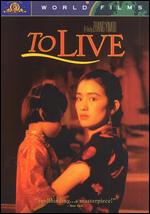
To Live

T'was a great day today!
after the whole day of work, we went to see a movie, we actually just went to another classroom, cause the movie was played by ESSEC China, which is our school's Chinese association. They celebrated Chinese New Year today, there've been some stuff/activities going on in school the whole day, which I missed for the most of it, being in classrooms listening to some boring stuff about finance and management control...
Oh well, the movie payed it all off! It was "TO LIVE", by Zhang Yimou, a great Chinese classic, which I never got to see while in China. Oh, it's really a great movie! It's realistic, very sad, but so beautiful and touching! As most of greatest Chinese movies, it has an "ambiance" of its own ;-), and even more, a whole life philosophy I would say, or at least a great lesson of life. It also reflects the change in China society through a whole generation, the one of our parents. I can't say more, in case you want to see it, just one last thing: if you like really good movies and are interested by China, you should definitely see it, the sooner the better!

Tuesday, January 24, 2006

Мороз и солнце ... на закате

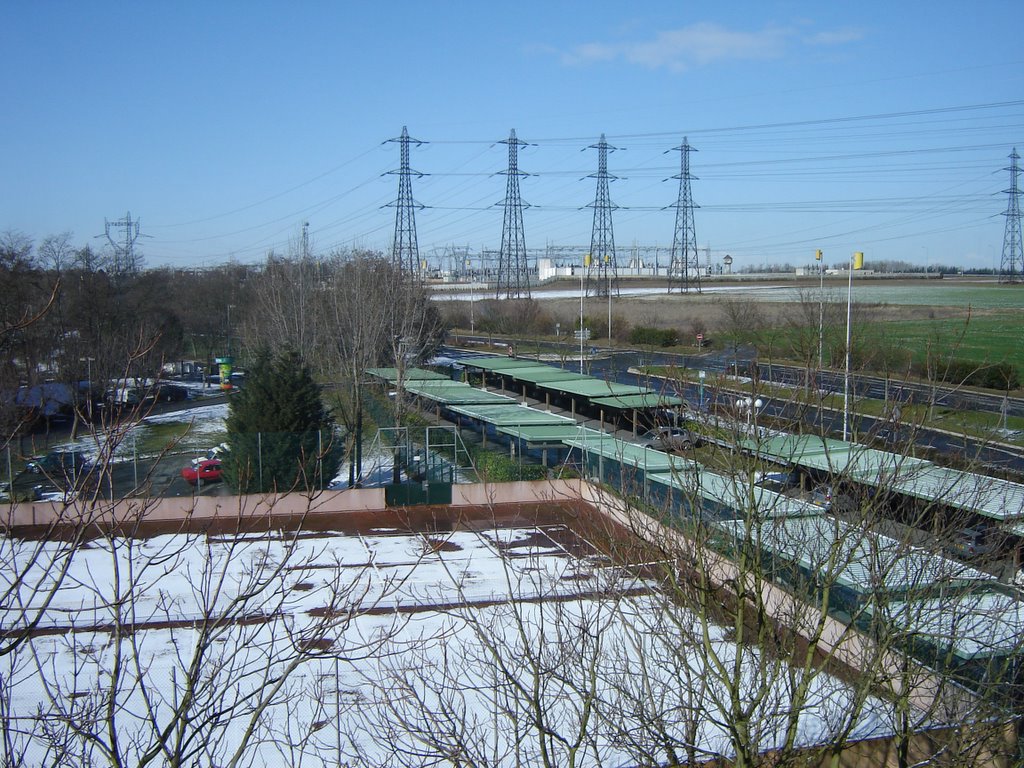
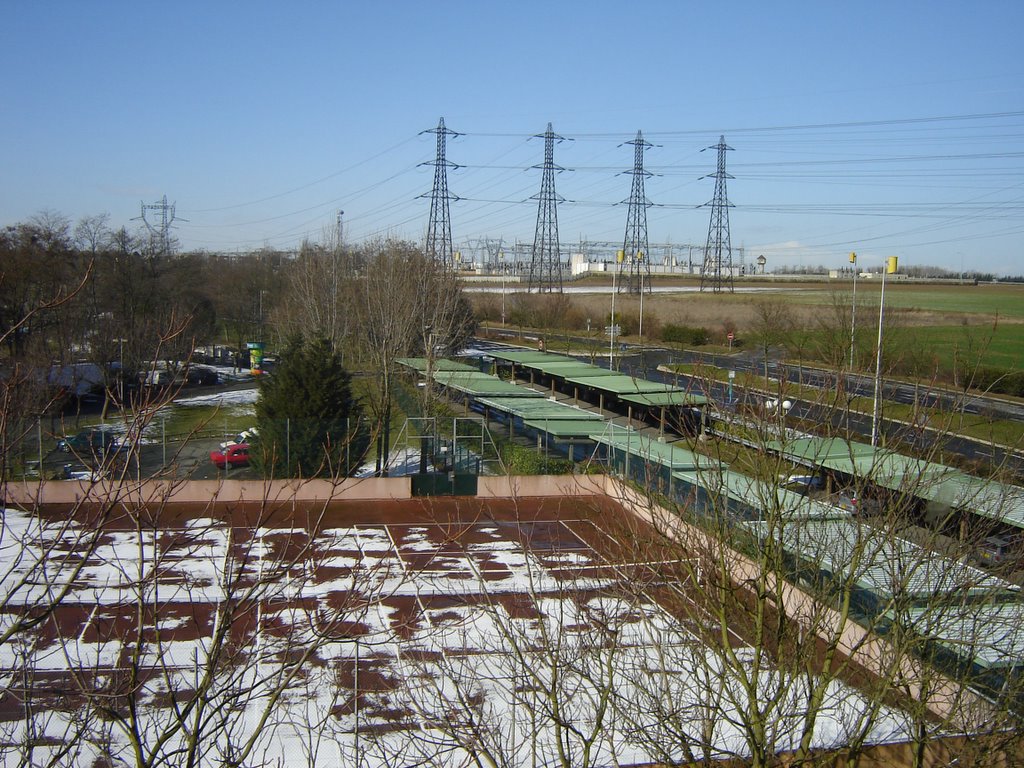
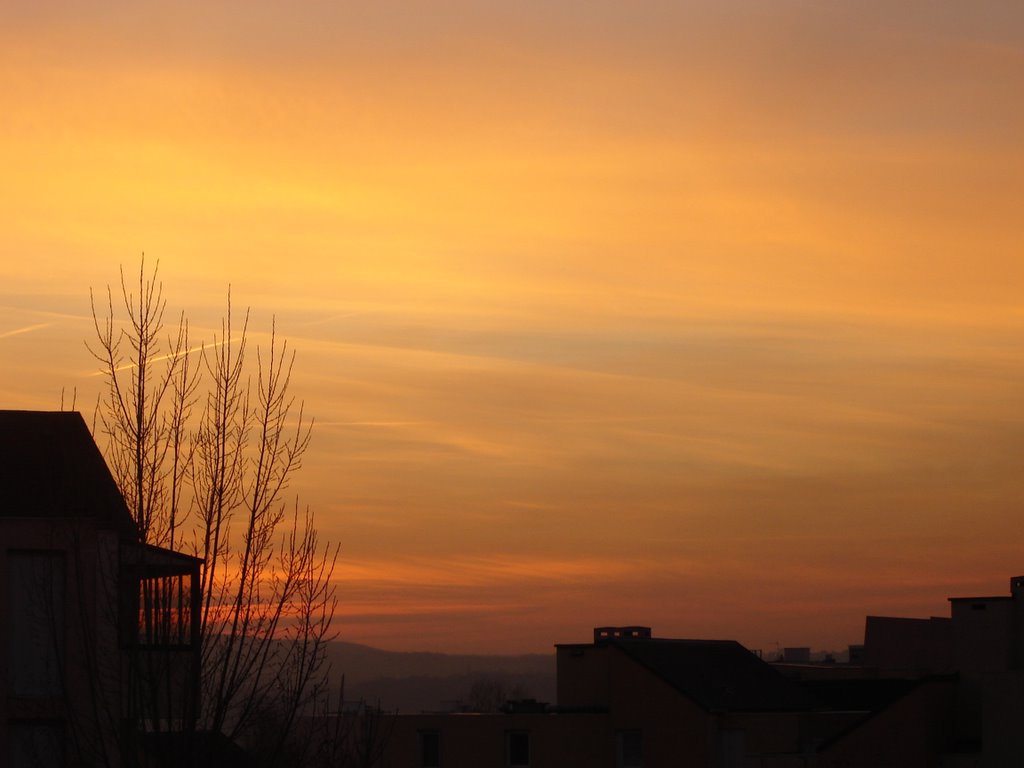
Сегодня холод добрался и до Парижа. Не так холодно, конечно, как дома, но всё же. И самая прелесть всего этого холода сегодня заключилась в красивейшем закате, фотографии которого см ниже!

The cold from the East reached Paris today. Well, it's as cold as back home, of course, but still! And the best thing about all this cold was an amazingly beautiful sunset that I could see from my window tonight (it was the only good thing about staying in front of my laptop screen looking for internships the whole afternoon...)


(щёлкни на картинку, чтобы увеличить!)
(click to enlarge!)

Sunday, January 22, 2006

China: their attitudes towards us foreigners 1


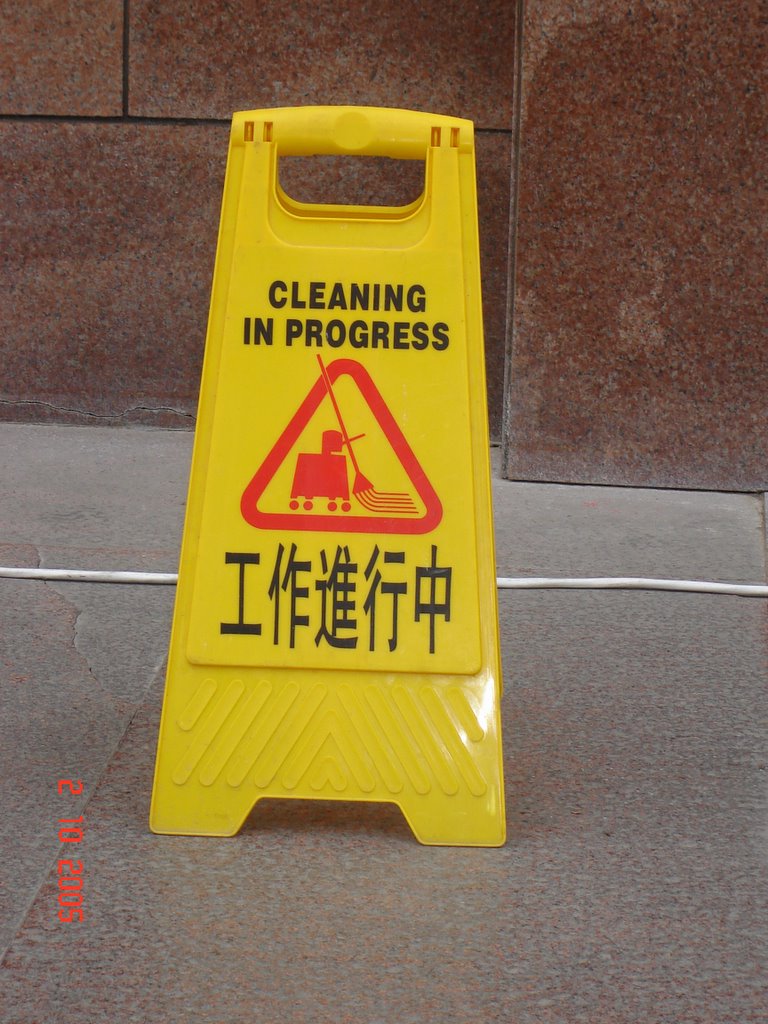
Chinese are very curious about foreigners, they are friendly and it’s easy to establish the first contact. They are very willing to learn foreign languages (esp. English, of coarse), and are totally aware that their educational system is too academic, lacking practice of foreign languages, so they grab every opportunity to talk to the foreigners. Chinese people’s English is sometimes quite funny, they speak like books. Contrary to us, they learn most complicated phrases and very formal English. So when they use it in daily conversations, it is seldom appropriate. They also make A LOT of ridiculous mistakes when translating. You can travel around China and just collect English translations of Chinese signs. Usually, these don’t make any sense and are hilarious.

For Chinese, foreign languages are doors to the world outside China. They sincerely admire people who speak several languages. But also ignore a lot about other countries. If I speak in English to Chinese, I get get two sorts of reaction, completely opposite: one is “Wow, you are Russian, and you can speak English?! How is that possible??” or “You speak English in Russia, right?” Once again, everything is possible in China…
Then, after the first “Hi, my name is…”, making friends with Chinese isn’t that easy. First, the language barrier. You must speak the language good enough to be able to lead the conversation beyond these “standard” Q&As, usually in the following sequence:
“Hi, what’s your name? Where are you from? Oh, where is …(the name of your country) Do you study Chinese here? For how long? Where? Do you like China? What do you think of Chinese food?”
This usually takes from 10 to 20 minutes, depending on your linguistic skills or body language. Then comes an awkward moment of “I should make friends with you to learn Chinese/English, but I have absolutely nothing more to tell you, because I don’t speak your language well enough”…Anyway. Those who came to China to work/study have all been through this and have a picture of the situation. This also reflects that other feeling I sometimes had that for a Chinese, “friendship” with a foreigner is just a means to improve English. It is extremely difficult to become real friends with a Chinese person that doesn’t speak English, unless your Chinese is fluent, of course.

Saturday, January 21, 2006

Sunday, January 15, 2006

Friday, January 13, 2006

Have I stayed too long in China?!? 2 of 2

It’s already my second week in Paris after a year-and-a-half break in China, but I still:

- Look around stupidly way too many times before crossing the street, and when a car is approaching, wait until it gets close and look at the driver a few seconds to see whether he lets me go or not. Must be really annoying for the drivers here, but in China you die if you don’t do that!

- Keep noticing that French girls ALL wear scarves!! And the bigger the scarf, the better! Sometimes they wear HUGE super warm scarves and small thin open shoes… Ridiculous

- Miss chopsticks and Chinese food…Yes I do!

- But also enjoying real European food SO much, even a simple sandwich tastes so good here!

- Feel SO short! In China, it was just perfect, but here people are considerably taller, so I feel so small. “Then again, you ARE very small…” (who knows where this quote is from?)

And the last thing: every day in Paris, I can’t help admiring this city, it’s just amazingly beautiful. One of the things to do in this life is definitely come to Paris at least once!

Thursday, January 12, 2006

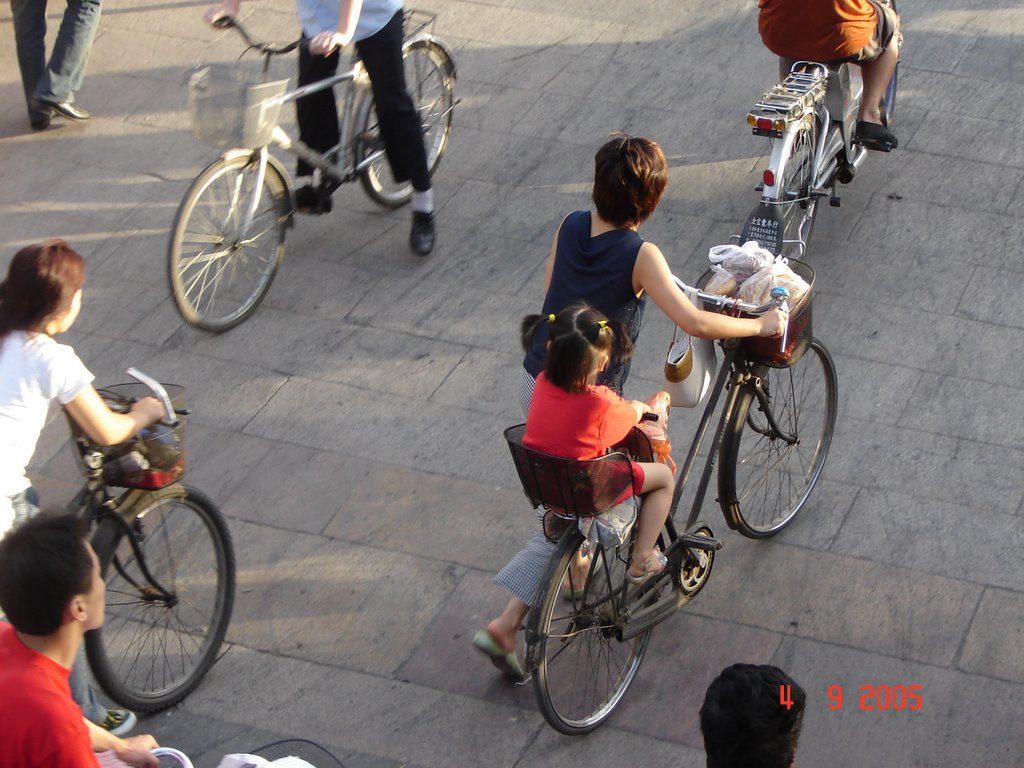
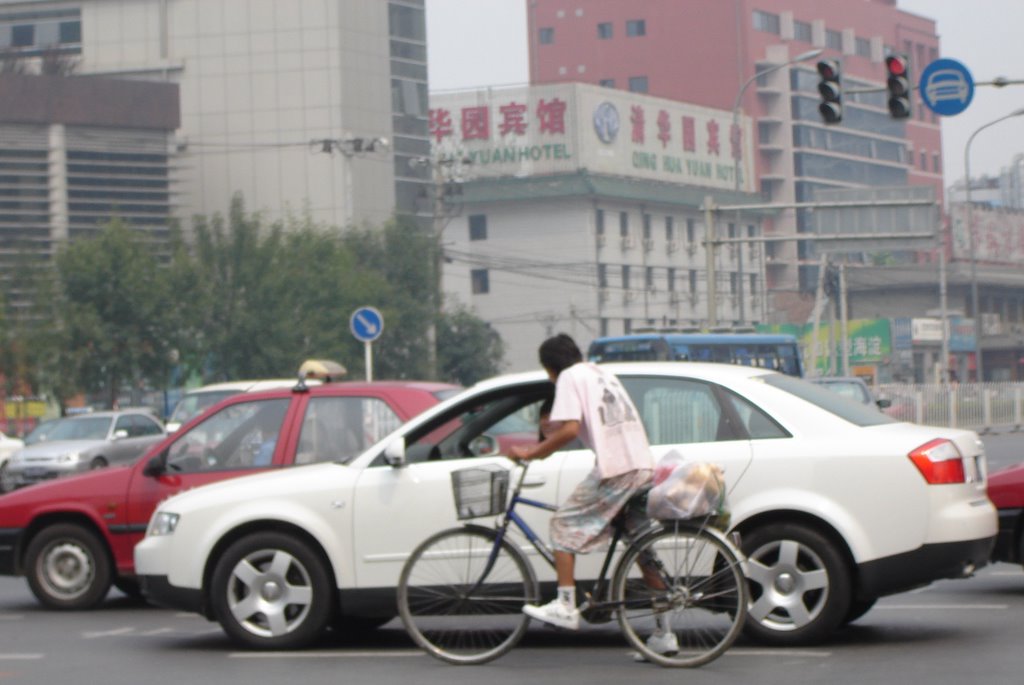
Friendship of a cyclist and a driver on Chinese roads. So moving...!


Дружба велосипедиста и шофёра, это так трогательно...!

Wednesday, January 11, 2006

A nice little story for MBA graduates...

From: www.kalibrio.com/foundation1.php?cate=5


A boat docked in a tiny Mexican village. An American tourist
complimented the Mexican fisherman on the quality of his fish and
asked how long it took him to catch them.

"Not very long," answered the Mexican.

"But then, why didn't you stay out longer and catch more?" asked the American.

The Mexican explained that his small catch was sufficient to meet his
needs and those of his family.

The American asked, "But what do you do with the rest of your time?"

"I sleep late, fish a little, play with my children, and take a
siesta with my wife. In the evenings, I go into the village to see my
friends, have a few drinks, play the guitar, and sing a few songs . .
I have a full life."
The American interrupted, "I have an MBA from Harvard and I can help
you! You should start by fishing longer every day. You can then sell
the extra fish you catch. With the extra revenue, you can buy a bigger
boat."

"And after that?" asked the Mexican.

"With the extra money the larger boat will bring, you can buy a
second one and a third one and so on until you have an entire fleet of
trawlers. Instead of selling your fish to a middle man, you can then
negotiate directly with the processing plants and maybe even open your
own plant. You can then leave this little village and move to Mexico
City, Los Angeles, or even New York City! From there you can direct
your huge new enterprise."

"How long would that take?" asked the Mexican.

"Twenty, perhaps twenty-five years," replied the American.

"And after that?"

"Afterwards? Well my Friend, That's when it gets really interesting,"
answered the American, laughing. "When your business gets really big,
you can start selling stock s and make millions!"

"Millions? Really? And after that?" said the Mexican.

"After that you'll be able to retire, live in a tiny village near the
coast, sleep late, play with your children, catch a few fish, take a
siesta with your wife and spend your evenings drinking and enjoying
your friends."

Know where you're going in life... you may already be there

Monday, January 09, 2006

Echange à Tsinghua

Il y a beaucoup de gens qui m'ont demandé comment s’est passé mon échange à Tsinghua.
Et bien, pour répondre à cela, je dirais que c’était une expérience plutôt positive. En tout cas, ça m’a permis de voir un peu le système éducatif chinois, de qualité en plus, puisque c’est quand même la meilleure université chinoise. J’ai rencontré aussi beaucoup de gens intéressants grâce à ces quatre mois.
Maintenant, pour détailler un peu :

- les cours. La qualité des cours était moyenne. N’y allez pas pour les cours, car la qualité académique n’a rien à voir avec les cours MBA en Europe ou aux Etats-Unis. On peut limiter les dégâts en prenant quelques cours recommandés par des étudiants internationaux, tels Managing Global Innovation, International Marketing, Human Ressource, Advanced Managerial Communication. Il y a parfois des intervenants de MIT qui viennent faire des conférences sur des sujets précis. Eux sont bons par contre. De manière générale, les conférences sont intéressantes et bien menées.
On peut aussi faire du chinois, il y a deux cours basiques proposés. Si c’est trop basique pour vous, il y a aussi possibilité d’aller à l’école de langues qui est à côté du métro Wudaokou et qui s’appelle Diqiucun. Cette école est excellente, il y a des cours de tous niveaux, à tous les horaires possibles et pas cher comparé à l’université de langues par exemple (2h de cours par jour, 5 jours par semaine pour seulement 50 €). On trouve aussi facilement des profs particuliers pour à partir de 3 € de l’heure.

- l’échange avec les étudiants chinois. Dépend de votre motivation et aussi de votre niveau de chinois. Bien qu’étant dans un programme International MBA, ils ne parlent pas toujours bien anglais. Mais on peut faire du language exchange, c’est utile aux deux parties ! Les étudiants chinois sont plutôt accueillants, ils vous montreront Pékin avec plaisir, et vous inviteront au karaoké ! (il y a intérêt à aimer ça en Chine. lol). Par contre, l’âge moyen est beaucoup plus élevé qu’à l’ESSEC. C’est plutôt 30 ans, il y en a qui approchent la quarantaine, mariés avec des enfants.

- activités extrascolaires. Tsinghua a de nombreuses associations et des activités sportives. Pour ces dernières, il n’y a pas de problème, par contre, pour les autres, il faut parler chinois. Déjà, les info sur les associations sont sur le site qu’en chinois et les gens qui en font partie ne parlent pas forcément l’anglais.

- étudiants internationaux. Pour ceci, c’est une expérience unique et très enrichissante. On est amené à rencontrer des personnes du monde entier, avec des parcours totalement différent, et vivre avec eux une expérience quand même hors du commun. Dans ma promo, on organisait des soirées toutes les semaines, et c’était très sympa.

- découverte de Pékin et de la Chine. Par contre, pour cela, vous aurez du temps libre ! L’échange n’étant pas trop prenant, on peut même faire des voyages en dehors de Pékin. Et il y en a des choses à voir en Chine. Mais pour cela, je crois que vous n’aurez pas besoin de mon aide !

En ce qui concerne la différence entre Tsinghua et Guanghua. En fait, c’est un peu comme ESSEC et HEC. On ne peut pas vraiment dire laquelle est meilleure. Je ne sais pas quel est le niveau des cours à Guanghua, et au niveau de l’ensemble de l’échange, je pense que les deux se valent.

Pour les possibilités de trouver des stages, c’est faisable, surtout si vous avez des relations personnelles. C’est surtout par les guanxi que ça marche en Chine. Mais il ne faut pas compter beaucoup sur Tsinghua. Bien qu’ils aient un Career Centre assez important, avec des grandes entreprises qui viennent recruter sur le campus, les offres s’adressent presque toutes à des chinois de nationalité ou totalement bilingues.

Apparemment, on a le choix de partir en février ou en septembre. Je pense que cela doit être équivalent. Dans les deux cas, il y a une semaine de vacances (1er au 7 octobre et 1er au 7 mai), il y a été et hiver au niveau du climat, et il y aura donc possibilité de voyager. Vous pouvez aussi soit arriver un mois plus tôt, en août, soit repartir un mois plus tard, en juillet, pour faire des voyages. A Pékin, les deux mois d’été (juin - juillet), il fait très chaud (30-40°). Et l’hiver, il fait environ 0 à -8°.

Enfin, un point très important : je ne conseille pas de faire cet échange si vous ne parlez pas le chinois ou êtes vraiment débutant !
De mon expérience, parmi les étudiants internationaux qui ne parlaient pas le chinois, environ deux tiers auraient préférés de ne pas venir en Chine. La barrière de la langue est vraiment à considérer et le chinois n’est pas une langue qui s’apprend en 4 mois, même si on est dans l’immersion totale !

Voilà pour le plus important. Je détaillerai les modalités pratiques et ce qu’il faut savoir sur la vie à Pékin dans mon rapport d’échange que je dois avoir fini d’ici une semaine. Sinon, n’hésitez pas de me solliciter par mail pour plus de précisions !

Saturday, January 07, 2006

Un peu de France à Pékin...


International: café français, tenu par les coréens, au coeur du quartier universitaire à Pékin...
International: French café, opened by Coreans, in the heart of the University district in Beijing...

Have I stayed too long in China?!? 1 of 2

I think it’s been too long I lived in China…why do I say so? Well, because now I’m back to Paris and some stuff keeps happening to me that says that I’m not quite used to living here yet!

So, it’s been definitely too long I was in China, because:

- Every time I automatically convert Euros to RMB and every time it’s more than 100 RMB (which happens like 100 times a day, especially in the supermarkets) I can’t help thinking “Wow, that’s expensive!”

- When I took the bus at the airport, I automatically rushed in without waiting for everybody to get out, because in China, if you wait, you never get in! And so people got angry and of coarse made a loud comment “Il faut laisser passer les gens d’abord!” (“You must let people go out first!”)…French complain… A LOT! Everybody knows that…

- I can’t believe streets are so empty; there are NO people in France!

- Everybody speaks French all the time and I understand everything people say! lol

- …where are all the bikes?...

- Nobody drinks hot water, even in restaurants; they only have cold water… And how come I don’t have a water machine in my room?!?

- People TALK! Yes, they do, and a lot, and ALL THE TIME! The first days, I had a feeling that French never talk at home, so they need to express themselves once outside… in China, you never talk to strangers. In France, you always talk, otherwise you are considered impolite! Quite a few times I was confused when people addressed me in the street with a “bonjour!”, I didn’t know what to say, lol! Have to get used all over again to say hello-thank you-good bye-have a nice day/weekend/afternoon to everybody. French are SO polite!...

- There are NO taxis here…and public transport is so expensive. The time when I could afford taking a taxi ten times a day is well gone…sniff!

- Apartments are so small!

- It rains all the time

- People are all dressed the same, and they only wear dark colours! However, they definitely have more style than the Chinese (no offence, it’s just so different!)

- People use perfumes! I didn’t notice it before, but when you go down the street, you can feel that every person going by has a different perfume. Conclusion: they don’t use perfume in China!

- I almost never need cash here, all payments are by credit card and cheques

- The food tastes SO good! I spend hours choosing yoghurts, ice creams and … stinky cheese of coarse, I missed it SO much!!

- Restaurants are closed in the afternoon…

- And everything is closed on Sunday!

- More than that, you must have a one-year visa now to buy a mobile phone with a one-year “abonnement”! So I can’t have one for at least three weeks, because when you come here, you only have a 3-month visa and you have to apply for the long one at the “préfecture”, which takes a while… Great! It’s no good to be phoneless…

(to be continued, there is a lot more to say about being back to Paris after a year and a half in 中国!)

Friday, January 06, 2006

Monday, January 02, 2006

«Biao yin» 表音 and «Biao yi»表意

Разница между китайскими иероглифами и западными алфавитами фондаментальна и заключается в том, что буквы выражают звук, а иероглифы – значение. В китайском это называют «Biao yin» 表音 и «Biao yi»表意.
Китайские иероглифы подразумевают, а не называют звуком. Так что сами китайцы привыкли понимать то, что другой человек подразумевает. Например, говоря на английском, они постоянно путают «он» и «она», потому что на китайском что 他, что 她, звучит одинаково: «та», а визуально в одном иероглифе нарисован мужчина 人, а в другом – женщина女, не перепутаешь! Наверное поэтому говорящий ожидают, что слушащий понимает скорее значение, чем звуки, а сам скорее подразумевает, нежели прямо говорит.


The difference between Chinese characters and Western abc’s is fundamental and consists in that our letters express a sound, but Chinese characters express a meaning. The Chinese call it «Biao yin» 表音 and «Biao yi» 表意.
Chinese characters have an underlying meaning, they don’t express a sound. In this way, the Chinese are used to understand what others understate. To give an example, in English, they always mix up “he” and “she”. This is because in Chinese the sound “ta” is the same for both, 她or 他, but the characters are different: one has a woman女in it, the other - a man人, you can’t mix those up!
Maybe that’s partly a reason why the Chinese never say things directly, but always expect the other to understand the meaning behind the sounds.