Showing posts with label to read. Show all posts

Monday, November 27, 2006

A gift to Tretyakov Gallery

Some foreign-speaking friends complained about profusion of Russian entries on our blog recently… So I made this effort to translate some of this post in English. Sorry again, I didn’t do all of it, but you’ll have the idea.

This year is a 150-year anniversary of Russia most famous art museum: The State Tretyakov Gallery. The State Tretyakov Gallery is the national treasury of Russian fine art and one of the greatest museums in the world. It is located in one of the oldest directs of Moscow – Zamoskvorechye, not far from the Kremlin.
The Gallery's collection consists entirely of Russian art and artists who have made а contribution to the history of Russian art or been closely connected with it. The collection contains more than 150 000 works of painting, sculpture and graphics, created throughout the centuries by successive generations of Russian artists.
Russian art works, ranging in date from the 11th to the early 20th century, are on the show in Gallery's historic building on Lavrushinskiy Pereulok.
New building of the Tretyakov Gallery at Krymskiy Val houses a unique museum exhibition of national 20th century art.

This year, an enlargement of the Gallery started, as it terribly lacks exhibition space, hundreds of art works are kept in the reserves instead of being exposed. Works are technically complicated, because of an underground river and, thus, “floating” ground on which the building stands. As for a new façade, an original drawings by famous Vasnetzov shall be rebuilt, in order to match existing appearance.

Below, in the previous entry, in addition to more information in Russian, you will find some pictures of the museum and its most famous exhibits.

Monday, November 20, 2006

World Wide GRID — Bсемирная Грид-Cеть

(по статье электронного журнала Expert.ru)

XXI век, возможно, станет эпохой массового внедрения грид-технологий. Счастливое человечество стоит на пороге очередной компьютерной революции, в результате которой произойдет трансформация привычного для нас сегодня WWW (World Wide Web — интернета) в WWG (World Wide GRID — всемирную грид-сеть). Магическая грид-среда, способная виртуализировать процессоры, память и коммуникации, обещает превратить все компьютерные ресурсы мира в своего рода гигантский мультипроцессор, обладающий практически неограниченными вычислительными возможностями.

Информатизация сегодня выходит на четвертый этап своего развития. Первый был связан с появлением больших компьютеров (мейнфреймов), второй — с персональными компьютерами, третий — с появлением интернета, объединившего пользователей в единое информационное пространство. Первое же десятилетие XXI века, по мнению многих специалистов, знаменуется началом перехода на новые грид-технологии.

Пользователи компьютерных мощностей получат возможность прямого подключения к удаленной вычислительной сети (так же как к электроэнергии через бытовые розетки), не озадачиваясь вопросом, откуда именно приходят требуемые для работы вычислительные ресурсы, какие для этого используются линии передачи и т. п.
Основные ресурсные элементы грид-систем — суперкомпьютеры и суперкомпьютерные центры, а важнейшая инфраструктурная составляющая — высокоскоростные сети передачи данных.

Соединенные Штаты сегодня — безусловный мировой лидер по части практического строительства грид-сетей. В 2004 году Джордж Буш официально объявил о начале работы президентской стратегической GRID-программы (Strategic Grid Computing Initiative), основной целью которой является «создание единого национального пространства высокопроизводительных вычислений» (National High Performance Computing Environment).
К настоящему времени в США уже успешно функционируют четыре национальные грид-сети, находящиеся под заботливой опекой ключевых государственных ведомств: компьютерная сеть национального фонда научных исследований (NSF Comp. Grid), информационная сеть поддержки НАСА (NASA Information Power Grid), глобальная информационная сеть министерства обороны (DOD GI Grid) и сеть суперкомпьютерной инициативы министерства энергетики (DOE ASCI Grid).

Свою немалую лепту в процесс «всеобщей гридизации» вносят и частные американские компании. Весьма оригинален проект Sun Grid компании Sun Microsystems, стартовавший в прошлом году: машинное время сети центров обработки данных, содержащей суммарно около 10 тыс. процессоров, сдается компанией в аренду с оплатой из расчета 1 доллар за пользование одним процессором в час. Продажа времени Sun Grid осуществляется компанией по договору через чикагскую электронную фондовую биржу Archipelago Holdings. Через нее же покупатель может продать неиспользованные часы. Дополнительно в Sun предлагают услуги хранения данных по цене 1 доллар за гигабайт в месяц. Услуга предлагается организациям, имеющим эпизодические потребности в значительных вычислительных мощностях.

B середине июля 2006 года китайские СМИ во всеуслышание объявили о завершении работы над Китайским образовательным грид-проектом (China Educational Grid Project, CEGP). CEGP объединил компьютерные сети нескольких десятков крупнейших университетов страны и предоставил миллионам китайских студентов прямой доступ к базам данных, онлайновым учебным курсам и сервисным приложениям по самым разным направлениям и дисциплинам.

В январе 2006 года в Афинах было официально объявлено о начале выполнения финансируемого Европейской комиссией проекта EUChinaGRID. Главная его цель — объединение европейских и китайских грид-инфраструктур для повышения эффективности совместного использования различных научных приложений, работающих в грид-среде. Наметившийся стратегический альянс ЕС и Китая вполне можно рассматривать как одну из первых попыток создания сильного «грид-противовеса» претензиям США на мировое лидерство в этой крупномасштабной технологической гонке.

Tuesday, October 31, 2006

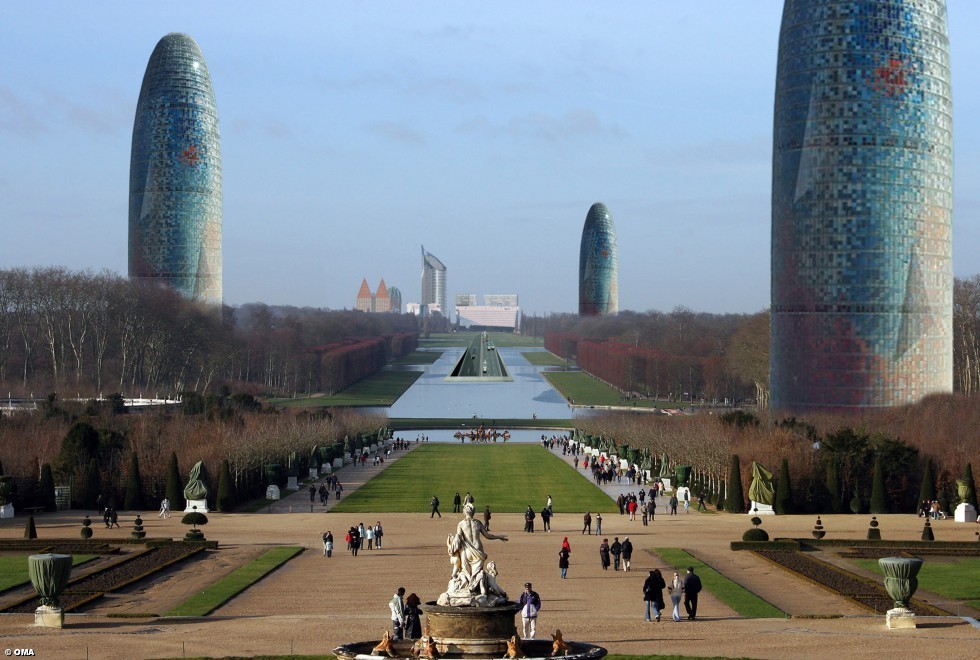
Trekvliettracée: Versailles-style high speed road

Office for Metropolitan Architecture (OMA) announces the completion of a research study for a new masterplan in The Hague. The study, undertaken on behalf of BPF Bouwinvest, Rabo Vastgoed and the city of The Hague, considers the 125 hectare site known as Binckhorst.

The project for the new masterplan is the proposed Trekvliettracée, a tunnel facilitating faster connection between Rotterdam and The Hague.

Complete redevelopment for Binckhorst is expected by 2020.The project is lead by OMA partner Floris Alkemade, whose previous work includes the Zeche Zollverein Kohlenwäsche building and masterplan in Essen; as well as masterplans for Almere, Orchard Road in Singapore, Euralille and the Universal Studios Headquarters. Alkemade is joined by OMA project architects Joshua Beck and Mark Veldman.

Take a look at the project: a Versailles-style park with a road that comes into it and disappears under the water alley. (click to enlarge) Wow! Those towers are really weird though...

Monday, October 30, 2006

World's top shopping street: Fifth Avenue, NY

New York’s Fifth Avenue has retained its top position as the world’s most expensive shopping street in the world, according to Main Streets Across the World. An average 93 m² unit on Fifth Avenue, at its most expensive stretch near the junction with 57th Street, now costs around €1.07 million a year.

Ranking 2006 (top 10):
1 USA, New York,5th Avenue
2 Hong Kong , Hong Kong, Causeway Bay
3 France, Paris, Avenue des Champs Elysées
4 UK, London, New Bond Street
5 Japan, Tokyo, Ginza
6 Ireland, Dublin, Grafton Street
7 Switzerland, Zurich, Bahnhofstrasse
8 Australia , Sydney, Pitt Street Mall
9 South Korea, Seoul, Myeongdong
10 Germany, Munich, Kaufingerstraße
The world ranking sees little movement at the top, with Hong Kong (Causeway Bay) retaining its second place and Paris (Avenue des Champs Elysées) its third place. The biggest riser is the Indian capital of New Delhi, with the most expensive location being Khan Market, having gone up 17 places to now be in 24th place.

(from an annual report by Cushman & Wakefield)

Wednesday, June 21, 2006

Tom Peters about marketing and management, или Что главное в современном бизнесе

Reading Expert (favourite Russian business magazine), I learned about Tom Peters who recently went to Siberia to give a conference on sucessful management methods. When I checked his website, I found some interesting ppts and these are some of his ideas about finding adequate clients for your products...


1. Men and women are different.
2. Very different.
3. VERY, VERY DIFFERENT.
4. Women & Men have a-b-s-o-l-u-t-e-l-y nothing in common.
5. Women buy lotsa stuff.
6. WOMEN BUY A-L-L THE STUFF.
7. Women’s Market = Opportunity No. 1.
8. Men are (STILL) in charge.
9. MEN ARE … TOTALLY, HOPELESSLY CLUELESS ABOUT WOMEN.
10. Women’s Market = Opportunity No. 1.

из интервью Тома Питерса (см. журнал Эксперт):

"Мы все закончили вузы, но скажите: приходилось ли кому-нибудь в жизненной ситуации извлекать квадратный корень? За свою долгую жизнь я еще не встречал таких людей. Мой подход к внедрению при условии преодоления языковых барьеров одинаково приемлем для любой страны. Нужно лишь учитывать особенности менталитета при общении. Например, если японцы говорят вам да, они имеют в виду нет. Но вне зависимости от корпоративной культуры и национальных обычаев существуют всего два типа личностей: одни любят людей, другие не любят. Если вы не любите людей, они хорошо это чувствуют и обижаются на любую мелочь, исходящую от вас. Если же любите, вы можете позволить себе тысячи ошибок, которые они даже не заметят. "

"Обращать внимание на людей в компании, а не на планы и отчеты — вот что является главным для достижения успеха в современном бизнесе"

Friday, March 24, 2006

The Strawberry, или притча о землянике

There was once a man who was being chased by a ferocious tiger across a field. At the edge of the field there was a cliff. In order to escape the jaws of the tiger, the man caught hold of a vine and swung himself over the edge of the cliff. Dangling down, he saw, to his dismay, there were more tigers on the ground below him! And, furthermore, two little mice were gnawing on the vine to which he clung. He knew that at any moment he would fall to certain death. That's when he noticed a wild strawberry growing on the cliff wall. Clutching the vine with one hand, he plucked the strawberry with the other and put it in his mouth.
He never before realized how sweet a strawberry could taste.


Шел человек по полю, и не знамо откуда, за ним погнался тигр. Человек стал убегать. Так добежали они до обрыва. На счастье человека, с обрыва свисала засохшая ветвь виноградника. Человек стал спускаться по ней, но внизу его ждал другой тигр. Да тут еще семейка полевых мышей вовремя решили полакомиться этой лозой. И вдруг человек увидел на расстоянии вытянутой руки землянику. Ах как вкусна была та земляника!

Wednesday, March 01, 2006

What's Web Office? (link here)

See also:

Directory of New Web Office Technology

China: their attitudes towards us foreigners 2

I know, it took me quite a while to post this, especially given that I had this post written this Christmas...But I had quite a lot of school work recently (yes, it does happen!) and internship search and interviewing are quite time consuming as well...
But now you have it: enjoy! (there is the 3rd part coming, but I haven't written it yet, so it can take a while!)


- Even given that I grew up in Latvia, where Russians and Latvians (two very different nationalities, cf.my post of Dec 28, 2005) are coexisting in a balance which is extremely difficult to understand for foreigners, I have never been that aware of nationality or race difference as in China.
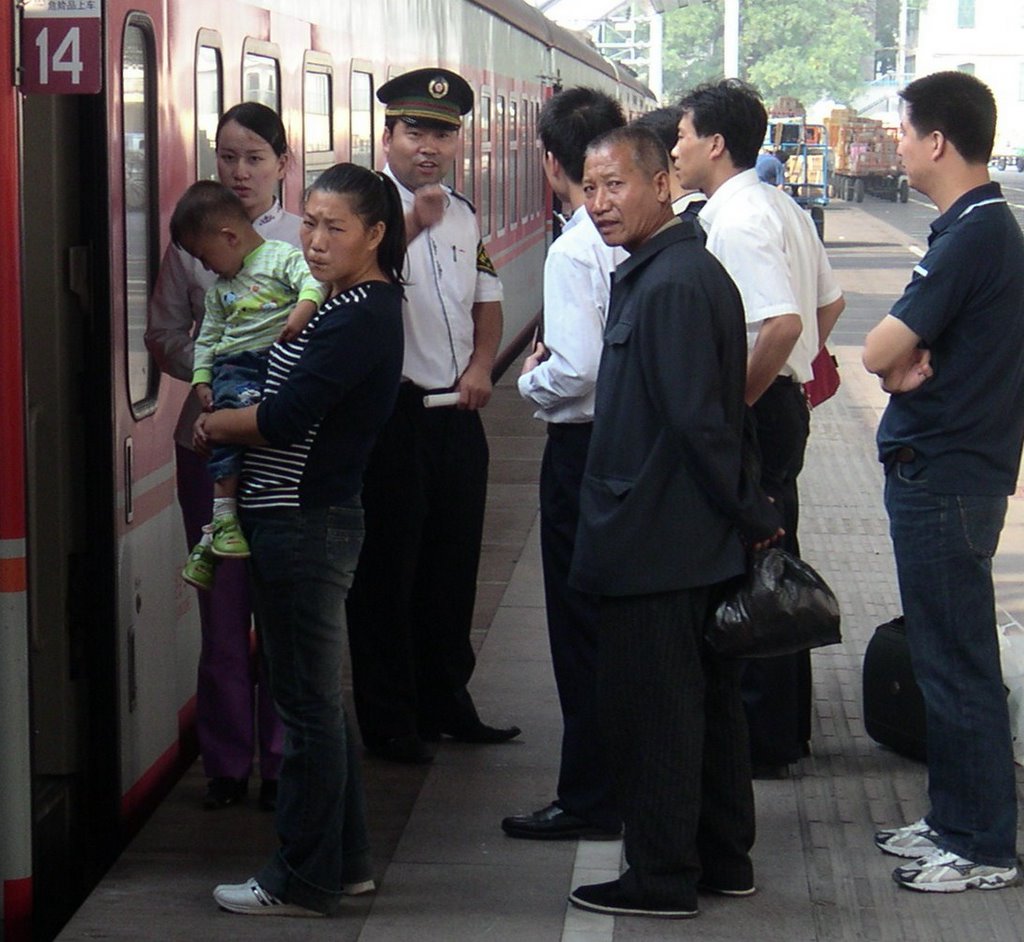
In China, I am a foreigner and I will always be. Even if I lived there for decades and spoke/wrote perfect Chinese (I wish I did!), I would remain a “laowai” (foreigner). When you are in China for the first time, you get surprised by how people stare at you, especially if you happen to be blonde;-) people stop you in the street and ask to take pictures of you. If you are a girl, first words you learn are “mei nü” and “piaoliang” (pretty). It is becoming a common thing to see foreigners on Beijing streets but there are still lots of places in China where people have never seen a white person. They are especially amazed by blond babies or small kids. A German friend of mine who lived in Beijing had two little sons, both blonds. When she was taking them for a walk, all Chinese would stop and admire “little angels”, play with them. Even, and especially, men! She told me that Chinese people don’t take babies outside, they consider that before they are one or two years old, it’s somehow bad for babies’ health to take them out. True, I almost never saw very small Chinese babies in the street.

The difference between foreigners and locals is fundamental, and appears in every aspect of everyday routine:
- one good point is that Chinese, as well as Russians by the way, usually respect foreigners more than their compatriots and regard them as “superior” in some kind
- people are more friendly to you as a foreigner (especially if you are blond and a girl)
- the bad point is that the Chinese, being good business people and sales people, set a “special” price for a foreigner. The price depends on several factors, like your level of Chinese language and knowledge of local prices and also on the way you look. A friend of mine told me that I couldn’t get cheap prices at Panjiayuan (Beijing antiques market) because I was “too well dressed”… Well, that is also a difference between Russians and Americans or some Europeans: we must be well dressed, the look is crucial!

Wednesday, February 08, 2006

Chinese lesson: 梨可不能分着吃 !

我刚来中国的时候不会说汉语,中国人说的话也一点儿都听不懂.
有一天我的中国朋友请了我和另外一个欧洲女孩去他们家玩儿. 我们近来了房间, 朋友的 妈妈很热情的对我们说欢迎欢迎, 请我们吃点水果. 我的那朋友她非常喜欢吃梨. 真好, 阿姨给她一个.我的朋友可不能 没有礼貌, 对我们欧洲人来说, 就是不好意思自己吃那么大的梨, 要分一下, 让别的朋友吃几块.她就问阿姨有没有袋子, 先把梨分了再吃.哟, 我们那时候不知道, 梨可不能分着吃 ! 今天看了书,有个解释, 就是 « 分梨 »和 « 分离 » 是同音. 因此,分梨是个忌讳 !

(我的中文有错误的话, 请中国朋友们帮我改正 !)


When I just came to China, I obviously couldn’t speak nor understand Chinese… At that time a Chinese friend of mine invited me and another European girl to her home. When we entered the place, my friend’s mother welcomed us and invited us to eat some fruit. My friend liked pears. But it’s quite impolite to grab a whole pear and eat it by yourself, so she asked for a knife to cut it in pieces. The mother pretended she did not hear (it’s impolite to refuse directly) and insisted on the girl eating the whole pear. What a cultural misunderstanding! The mother was embarrassed to refuse her guest’s request, and the guest was embarrassed to eat the whole fruit (quite big by the way) impolitely… Today I opened my Chinese book to finish lessons I didn’t have time to learn in China, and the name of the lesson was “Can’t cut a pear in pieces”. That’s how I remembered this small incident, which I never re-thought of before. In Chinese, “cut a pear” sounds exactly like “separate” (« 分梨 »and « 分离 »). That’s why nobody cuts pears in pieces before eating! Hopefully, my friend’s mother didn’t interpret that girl’s request like “I don’t want to stay in your home, I want to leave”…!

Monday, January 30, 2006

Le bout du monde, или Край света

Le bout du monde

- Oh-là-là, impossible de trouver un travail décent maintenant, on demande toujours de se déplacer à l’autre bout du monde. En plus, il faut y aller longtemps, sinon « ça ne sert à rien ». Six mois encore, bon, un VIE d’un an, ça peut passer, avec les transports, je veux bien, mais alors c’est le maximum !
- Ouais, c’est vrai. Aux entretiens, on demande toujours « Vous êtes mobile ? » « Euh…oui…entre l’Opéra et le Louvre, je suis tout à fait mobile ! »…

J’ai entendu cette conversation vendredi matin dans le bus pour aller à l’école. En écoutant ça, je me suis pensé « je ne cherche qu’une chose, c’est un emploi qui me permettrait de partir à l’autre bout du monde pour 2-5 ans…être mobile, c’est comme ça que je m’imagine au moins la première partie de ma vie professionnelle. Tendance moderne qu’ils disent. Pourtant, apparemment, les jeunes cadres dynamiques qui sortent de l’ESSEC MBA ne pensent pas tous ainsi ! »

- …En plus, on demande d’y habiter « au moins 5 ans » pour avoir « l’expérience suffisante de l’environnement et du monde de travail là-bas. » Un an maximum pour moi ! avec les avions, l’Eurostar, je pourrais peut-être survivre…

Attendez! Mais c’est LONDRES, le « bout du monde », dont ils parlent depuis le début !! En sachant qu’on est à Paris, à 1,5 h de train…
Comme quoi, la mobilité internationale n’est pas encore un réflexe pour tout le monde !


Край света

- О-ля-ля, в наши дни невозможно найти приличную работу! Работодатели вечно требуют ехать работать куда-то на край света. К тому же надолго! Полгода, ну год максимум, ещё куда ни шло, можно ездить туда-обратно.
- Ага, точно. Спрашивают на собеседовании «Вы мобильны?» «Ну...в общем, да, между Оперой и Лувром я вполне мобильна!»

Этот разговор я услышала в пятницу утром в автобусе по дороге в школу. Я ещё подумала : «А я-то как раз наоборот ищу такую работу, чтобы можно было ехать «на край света» работать, по крайней мере на пару лет. Мобильность, а по-другому нельзя, неинтересно! А ещё говорят, что это глобальная тенденция. Что-то молодые многообещающие кадры из ESSEC MBA не все так думают.

- …Да к тому же там ещё и жить надо лет пять, чтобы «полностью понять атмосферу и специфики бизнеса». Для меня лично год – максимум! Самолёты, Евростар, как-нибудь выжить можно...

Постойте, так это они ведь о ЛОНДОНЕ говорят с самого начала как о «крае света»!! Учитывая, что находимся мы в Париже, полтора часа на поезде от Лондона...
Вот тебе и мобильность!

Sunday, January 22, 2006

China: their attitudes towards us foreigners 1


Chinese are very curious about foreigners, they are friendly and it’s easy to establish the first contact. They are very willing to learn foreign languages (esp. English, of coarse), and are totally aware that their educational system is too academic, lacking practice of foreign languages, so they grab every opportunity to talk to the foreigners. Chinese people’s English is sometimes quite funny, they speak like books. Contrary to us, they learn most complicated phrases and very formal English. So when they use it in daily conversations, it is seldom appropriate. They also make A LOT of ridiculous mistakes when translating. You can travel around China and just collect English translations of Chinese signs. Usually, these don’t make any sense and are hilarious.

For Chinese, foreign languages are doors to the world outside China. They sincerely admire people who speak several languages. But also ignore a lot about other countries. If I speak in English to Chinese, I get get two sorts of reaction, completely opposite: one is “Wow, you are Russian, and you can speak English?! How is that possible??” or “You speak English in Russia, right?” Once again, everything is possible in China…
Then, after the first “Hi, my name is…”, making friends with Chinese isn’t that easy. First, the language barrier. You must speak the language good enough to be able to lead the conversation beyond these “standard” Q&As, usually in the following sequence:
“Hi, what’s your name? Where are you from? Oh, where is …(the name of your country) Do you study Chinese here? For how long? Where? Do you like China? What do you think of Chinese food?”
This usually takes from 10 to 20 minutes, depending on your linguistic skills or body language. Then comes an awkward moment of “I should make friends with you to learn Chinese/English, but I have absolutely nothing more to tell you, because I don’t speak your language well enough”…Anyway. Those who came to China to work/study have all been through this and have a picture of the situation. This also reflects that other feeling I sometimes had that for a Chinese, “friendship” with a foreigner is just a means to improve English. It is extremely difficult to become real friends with a Chinese person that doesn’t speak English, unless your Chinese is fluent, of course.

Wednesday, January 11, 2006

A nice little story for MBA graduates...

From: www.kalibrio.com/foundation1.php?cate=5


A boat docked in a tiny Mexican village. An American tourist
complimented the Mexican fisherman on the quality of his fish and
asked how long it took him to catch them.

"Not very long," answered the Mexican.

"But then, why didn't you stay out longer and catch more?" asked the American.

The Mexican explained that his small catch was sufficient to meet his
needs and those of his family.

The American asked, "But what do you do with the rest of your time?"

"I sleep late, fish a little, play with my children, and take a
siesta with my wife. In the evenings, I go into the village to see my
friends, have a few drinks, play the guitar, and sing a few songs . .
I have a full life."
The American interrupted, "I have an MBA from Harvard and I can help
you! You should start by fishing longer every day. You can then sell
the extra fish you catch. With the extra revenue, you can buy a bigger
boat."

"And after that?" asked the Mexican.

"With the extra money the larger boat will bring, you can buy a
second one and a third one and so on until you have an entire fleet of
trawlers. Instead of selling your fish to a middle man, you can then
negotiate directly with the processing plants and maybe even open your
own plant. You can then leave this little village and move to Mexico
City, Los Angeles, or even New York City! From there you can direct
your huge new enterprise."

"How long would that take?" asked the Mexican.

"Twenty, perhaps twenty-five years," replied the American.

"And after that?"

"Afterwards? Well my Friend, That's when it gets really interesting,"
answered the American, laughing. "When your business gets really big,
you can start selling stock s and make millions!"

"Millions? Really? And after that?" said the Mexican.

"After that you'll be able to retire, live in a tiny village near the
coast, sleep late, play with your children, catch a few fish, take a
siesta with your wife and spend your evenings drinking and enjoying
your friends."

Know where you're going in life... you may already be there

Tuesday, November 29, 2005

Nothing exists, или Нет ничего

"Nothing exists; all is a dream. God - man - the world - the sun, the moon, the wilderness of stars - a dream, all a dream; they have no existence. Nothing exists save empty space - and you!"

"I!"

"And you are not you - you have no body, no blood, no bones, you are but a thought. I myself have no existence; I am but a dream - your dream, creature of your imagination. In a moment you will have realized this, then you will banish me from your visions and I shall dissolve into the nothingness out of which you made me . . .

"I am perishing already - I am failing - I am passing away. In a little while you will be alone in shoreless space, to wander its limitless solitudes without friend or comrade forever - for you will remain a thought, the only existent thought, and by your nature inextinguishable, indestructible. But I, your poor servant, have revealed you to yourself and set you free. Dream other dreams, and better!

"Strange! that you should not have suspected years ago - centuries, ages, eons, ago! - for you have existed, companionless, through all the eternities.
Strange, indeed, that you should not have suspected that your universe and its contents were only dreams, visions, fiction! Strange, because they are so frankly and hysterically insane - like all dreams: a God who could make good children as easily as bad, yet preferred to make bad ones; who could have made every one of them happy, yet never made a single happy one; who made them prize their bitter life, yet stingily cut it short; who gave his angels eternal happiness unearned, yet required his other children to earn it; who gave his angels painless lives, yet cursed his other children with biting miseries and maladies of mind and body; who mouths justice and invented hell - mouths mercy and invented hell - mouths Golden Rules, and forgiveness multiplied by seventy times seven, and invented hell; who mouths morals to other people and has none himself; who frowns upon crimes, yet commits them all; who created man without invitation, then tries to shuffle the responsibility for man's acts upon man, instead of honorably placing it where it belongs, upon himself; and finally, with altogether divine obtuseness, invites this poor, abused slave to worship him! . . .

"You perceive, now, that these things are all impossible except in a dream. You perceive that they are pure and puerile insanities, the silly creations of an imagination that is not conscious of its freaks - in a word, that they are a dream, and you the maker of it. The dream-marks are all present; you should have recognized them earlier.

"It is true, that which I have revealed to you; there is no God, no universe, no human race, no earthly life, no heaven, no hell. It is all a dream - a grotesque and foolish dream. Nothing exists but you. And you are but a thought - a vagrant thought, a useless thought, a homeless thought, wandering forlorn among the empty eternities!"

He vanished, and left me appalled; for I knew, and realized, that all he had said was true.

THE MYSTERIOUS STRANGER
Mark Twain


«— Нет ничего. Все — только сон. Бог, человек, вселенная, солнце, россыпи звезд — все это сон, только сон. Их нет. Нет ничего, кроме пустоты и тебя.
— И меня?
— Но ты — это тоже не ты. Нет тела твоего, нет крови твоей, нет костей твоих — есть только мысль. И меня тоже нет. Я всего только сон. Я рожден твоей мыслью. Стоит тебе понять это до конца и изгнать меня из твоих видений, и я растворюсь в пустоте, из которой ты вызвал меня… Вот я уже гибну, кончаюсь, я ухожу прочь. Сейчас ты останешься один навсегда в необъятном пространстве и будешь бродить по его бескрайним пустыням без товарища, без друга, потому что ты только мысль, единственная на свете; и никому не дано ни изгнать эту одинокую мысль, ни истребить ее. А я лишь покорный слуга твой, я дал тебе силу познать себя, дал обрести свободу. Пусть тебе снятся теперь иные, лучшие сны.
Странно! Как странно, что ты не понял этого уже давным-давно, сто лет назад, тысячи лет назад, не понимал все время, что существуешь один-единственный в вечности. Как странно, что ты не понял, что ваша вселенная, жизнь вашей вселенной — только сон, видение, выдумка. Странно, ибо вселенная ваша так нелепа и так чудовищна, как может быть нелеп и чудовищен только лишь сон.
...
Нет бога, нет вселенной, нет жизни, нет человечества, нет рая, нет ада. Все это только сон, замысловатый дурацкий сон. Нет ничего, кроме тебя. А ты только мысль, блуждающая мысль, бесцельная мысль, бездомная мысль, потерявшаяся в вечном пространстве.

Он исчез и оставил меня в смятении, потому что я знал, знал наверное: все, что он мне сказал, было правдой.»

Марк Твейн
Таинственный незнакомец

Sunday, November 27, 2005

What's your problem?!

One of our professors is worth mentioning here.

Basically, he is ok. He can even be nice. But he is teaching a course to international students, and the course is supposed to be in English. And his English is non-existent…And it is really annoying! During first classes, he was encouraging students to ask questions and express their thoughts about the subject. Good. The only problem was that when somebody tried to ask a question, it would take the teacher about 15 minutes to understand it…
He is funny. When somebody raised his/her hand, the professor would point at him and say “OK, what’s your problem?!” That used to make us laugh. He must have noticed, so he doesn’t say that anymore. Actually, this class reminds me of an English class for our professor.

Last class, during a case study, he was talking about employers who force their employees work too much, “24 point 5 hours a day”. Even if I wasn’t really listening, I raised my head. He didn’t notice his own joke, as nobody else did. My classmates are so attentive during this exciting class.
Another time, during the same class, I raised my head from the laptop another time to look at the slides and I read “He and her husband…” Okay! So I started to listen to what the professor was saying. “He” turned out to be the woman’s family name. But it looked so funny on the ppt.
I feel sorry for this professor, but when the class is boring at this point, 2.45 hours is ve-e-ry long, and I need to entertain myself in any other way…

Saturday, November 26, 2005

Chinese education, или про образование в Китае...


The thing that inspired me to blog about is Chinese education.
The Chinese education system is not well-known worldwide, but it is the oldest one, and is worth admiration…

The Chinese were the first to have an examination system. In the old days, one had to pass an exam to become a civil servant, which was the most respected position. The last tour of exams was held by the Emperor himself. So this required long years of preparation and studies… While travelling across China, we often visited those sort of small temples, which actually used to be that or that famous scholar’s home.

BTW, one of the local dishes in Yunnan province is called “noodles from across the bridge” (过桥米线), and the story comes from those studious times… Once there was a famous scholar, who spent his life studying in his little Chinese-style “cottage” in the middle of the lake. A long-long bridge led to there, and every day, his wife would prepare a bowl of noodles for this scholar’s lunch (even living across the lake, he managed to be her husband…). But by the time the woman would cross the bridge, the food would be cold, and the husband would beat her. So one day she just made the soup, prepared noodles and some dried stuff to put in that soup, and at lunch time, she put everything in the bowl, covered it with a plate and by the time that she crossed the bridge, the food was ready and remained steaming hot. The man was happy… So nowadays, if you go to Yunnan, you have to try this dish, it’s a huge bowl of noodles, which you prepare the same way as that witty woman.

So, about those exams. Every year they would take place during several months. And during all that time, the candidates would live in a tiny hut, where they could only sleep, eat and study. (Dream life?!)

From those days, education became number one priority in China. Parents would do anything to have their kid enter the best university. And when you think of how many Chinese people there are comparing to the number of those universities, you get why the competition is so fierce. Especially after the of the one child policy, the whole family’s hopes lay on the only child. It makes spoiled kids and kids who only know how to “study hard”. BTW, those are the first Chinese words you learn, along with “hello”, “thank you” and “rice”.

Maybe that is also why the teachers’ attitudes are so different from what we are used to in China. Let me give you an example. It happened last week, during my Organizational behaviour class.
The class is in English, and so are supposed to be all the teaching materials. Suddenly during the class, the teacher shows us a slide entirely in Chinese and says “This is a story from Chinese history, it is very philosophical one, hard to translate, so sorry international students, we will do that in Chinese”. As international students start grudging, the teacher added: “Don’t worry, even most Chinese don’t understand that. Who understands the story? Nobody? You see, I told you! Next slide…”
Wow, I was shocked by this attitude. The teacher not only does not explain things, but she also tells you are not smart enough to understand! Very often, Chinese people do not even try to explain things to us foreigners, they just say that it is their traditional culture/mentality/philosophy… and we won’t be able to get it anyway.
Then later I found this quote from Confucius that can maybe clear it all up a little:
(sorry for the bad translation) “The person who is not willing to learn, is not worth giving guidelines; The person who doesn’t have difficulties in expressing his thoughts is not worth helping; The person who, being given one angle cannot have the idea of the other three, is not worth teaching.”

I also noticed that teaching is kind of tyranny here, the Teacher having absolute power over students…
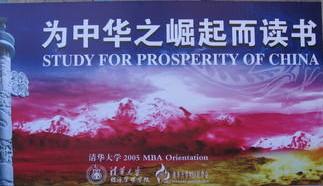
Teaching is a very respectful profession, even if it doesn’t pay that well. And the teacher has a complete authority over the students, no matter how old they are. In my MBA program at Tsinghua, some Chinese students are in their late thirties, and still, they have some sort of fear of the teacher. Even their voices change when they address the Teacher.
So as I understand it, school studies are pretty much an assimilation of a huge amount of knowledge without asking questions or discussing what you learn. Hence, the total incompetence of Chinese to lead a discussion in class. Only at MBA level nowadays can Chinese students express themselves in class (which stays limited however). And when they do talk, it takes them half an hour to express themselves. This is due to their English, which is a written, not spoken level. And they LOVE introducing their ideas, which means that it takes a guy 5 minutes before he answers “yes” or “no”. The shortest introduction sounds like this “About the question who from managers must be responsible for the errors in delivery system, my opinion is to my mind I think that maybe sometimes it’s mister Smith”. God, they are not efficient! And they never say things directly…Maybe it’s just being polite and respectful towards the teacher. But the teacher can say things directly! She can tell things like “go to your point, we have no time, come on!”. And students must call the teacher “Teacher”, not by his/her name. When I think that in the States they call their teacher by the first name, regardless of the age difference…


Хочется рассказать про китайскую систему обучения.
Их система, наверное, мало известна в европейских странах, но всё-таки уже только с исторической точки зрения заслуживает внимания и восхищения.

Они первыми внедрили систему экзаменов: уже тысячу лет назад для того, чтобы «стать человеком», т.е. получить высокопоставленный пост, нужно было сдать экзамены. И чем выше пост, тем сложнее экзамены. На самые высокие посты экзамены принимал сам император. Экзамены проводились ежегодно. Те, кто хотел в жизни чего-то добиться, стремились стать чиновниками, и соответственно, для этого надо было годами готовиться...Путешествуя по Китаю, я много раз встречала небольшие строения, напоминающие храмы, где в древние времена всю свою жизнь учился (или совершенствовался) тот или иной «школяр». (см. Снимок из Юнана).
К слову, одно из традиционных блюд на юге Китая (云南), так называемые «макароны, перенесённые через мост» (过桥米线). История этих макарон такова: в древние времена жил один «школяр», всю свою жизнь он проводил в учении, и жил в небольшом доме посредине озера, к которому вёл длинный мост. И каждый день жена его, жившая на берегу озера, должна была приносить ему обед (непонятно, как он умудрялся быть женат, и как его жена терпела такую жизнь...). Каждый раз она приготавливала макароны в супе, но пока доносила их до хижины по длинному мосту, они истывали, и ей попадало от мужа. Тогда она додумалась: варила сначала бульон, отдельно макароны, и приготавливала разные приправы и сушёные прибавки в суп. Когда наставало время обеда, она наливала в миску бульон, засыпала туда приготовленные приправы, накрывала тарелкой, и, когда доносила миску до дома мужа, обед как раз был готов. Сейчас, приготовленные по такому же принципу макароны, подают в ресторанах...
Но хватит про еду, об этом следует написать отдельно и подробнее.

Так вот, про экзамены. Проводились они значит ежегодно и длились окола месяца или даже больше. Всё это время кандидаты в чиновники жили в специально предоставленных им крошечных кельях, где не было ничего, и где они только и могли, что спать, есть и сдавать экзамены. (в общем, нечто даже хуже, чем тюрьма, причём добровольная!) И так долгие-долгие недели...
С тех пор, учёба и образование в Китае – номер один. Родители делают всё возможное и невозможное, чтобы их ребёнок попал в хороший университет. Не удивительно, ведь китайцев так много, а хороших университетов сравнительно мало, поэтому и конкуренция просто немыслимая. Особенно после внедрения политики «одна семья – один ребёнок», все надежды семьи – на этого единственного ребёнка. В результате, с одной стороны, его балуют, ничего не заставляют дома делать, во всём потакают, а с другой стороны, на него падает огромная ответственность «хорошо, усердно учиться». Кстати, одними из первых китайских слов, которые неоходимо знать, наравне со «спасибо», «рис» и «такси», как раз являются «усердно учиться».

Наверное, от этого со стороны учителей отношение совсем не такое, как на Западе. Вот пример из моего университета, где я учусь на программе International MBA, соответственно на английском языке:
Буквально на прошлой неделе, на уроке Organizational Behavior учительница вдруг даёт нам слайд, полностью на китайском, и говорит «извините, иностранные студенты, но это из китайской истории, философии, это вам будет слишком сложно понять, я не буду переводить.» На слайде была рассказана небольшая история, мне сложно было понять, т.к. язык был какой-то древний. Мы начали издавать возмущённые возгласы, тогда учительница говорит, «не волнуйтесь, это даже китайцы, и те немногие понимают. Кто понимает эту историю? Никто? Ну я же говорила! Следующий слайд...» Мы были в шоке. В отличие от французской системы образования, где всё рассчитано на, мягко говоря, не самых умных, китайская это просто дикая конкуренция с элементами тирании в лице учителя. Они не будут объяснять, ты сам должен додуматься, но проблема в том, что очень часто они говорят «это наша история/культура/менталитет, вам этого не понять», не пытаясь даже попробовать объяснить...Жалко очень...
А вот цитата из Конфуция, где тоже можно найти объяснение такому отношению:
Учитель сказал: "Того, кто не стремится [к достижению знания], не следует направлять [на правильный путь]. Тому, кто не испытывает трудностей в выражении своих мыслей, не следует помогать. Того, кто не в состоянии по одному углу [предмета] составить представление об остальных трех, не следует учить".

Авторитет учителя в Китае непоколебим. И хоть учителя и немного получают по сравнению с бизнесменами, эта профессия вызывает уважение. Отношение «учитель-ученик» особенное. Учитель - он и родитель, и наставник, и тиран! Как он сказал, так и надо делать. Я так понимаю, что в Китае учёба в школе сволится к поглощению огромного количества знаний (одни только иероглифы чего стоят), без их обсуждения и, не дай Бог, оспаривания. Поэтому «обсуждение» или «дискуссия» в классе – вещи незнакомые. Только на уровне МБА, благодаря иностранным профессорам, студентов приучают говорить на уроках. И работа эта нелёгкая. Мои уроки на английском, и далеко не многие китайцы свободно на нём изъясняются. А когда изъясняются, то переводят дословно, и наверное на тот манер, как их учили в школе. То есть, вместо того, что бы просто ответить на вопрос учителя или высказать собственную мысль, они в течение пары минут, а иногда и больше, будут пересказывать вопрос или словно зачитывать пролог к сочинению... Самое короткое вступление звучит приблизительно так «По вопросу, кто из менеджеров должен нести ответственность за нарушение поставок, моё мнение таково, что я думаю, что наверное...может быть...иногда, это должен быть господин Смит.» Так и хочется задать законный вопрос: так наверное, может быть, иногда, или должен в конце концов???!!!! Китайцы не умеют просто и кратко ответить да или нет... Наверное, это проявление уважения к учителю...Его кстати, называют «учитель», а не по имени. И его авторитет не уменьшается, даже если ученик его старше. Мои «одноклассники», некоторым уже под сорок, боятся учителя!! Или по крайней мере опасаются... У них даже голос меняется, когда они обращаются к учителю. Да-а-а, после такого трудно представить, что американцы называют учителей по имени, независимо от их возраста...